
Skincare packaging design in Singapore is not just about shelf appeal. It directly affects HSA labelling compliance, product stability, sustainability claims, and in some cases NEA packaging reporting.
TL;DR: Summary
- For Singapore skincare brands, the best skincare packaging design choice is the format that fits the formula, meets HSA label rules, and supports your commercial model, not simply the pack that looks most premium.
- HSA requires key label details on the outer packaging or, if there is no outer packaging, on the immediate packaging, including product name and function, ingredient list, country of manufacture, responsible company name and address, batch number, and date details when minimum durability is under 30 months.
- Airless pump systems are usually strongest for serums and active skincare because they improve hygiene and reduce product exposure to air, while jars still suit thick creams and balms where texture and user experience matter.
- Refillable packaging and flexible sachets can reduce material use, but they come with trade-offs in recycling, refill operations, and artwork complexity. Global packaging waste in beauty is estimated at 120 billion units annually.
- If your company’s annual turnover exceeded S$10 million in 2024, NEA Mandatory Packaging Reporting may require 2025 packaging data and 3R plans to be submitted from 1 January 2026 to 31 March 2026.
- A strong packaging workflow starts with formula compatibility, then label space, then fill and supply-chain practicality. If those three are checked early, brands avoid many costly reworks.
The practical question is not “Which packaging looks best?” It is “Which packaging protects the product, fits the legal label, and still works for margins, logistics, and future scale?”
Why is skincare packaging design a compliance issue in Singapore?
Yes. In Singapore, HSA and NEA make skincare packaging design a compliance task as well as a branding task.
Cosmetic products supplied in Singapore must comply with the Health Products Act and the Health Products (Cosmetic Products, ASEAN Cosmetic Directive) Regulations 2007. In simple terms, the pack is part of how the product becomes saleable. A cosmetic product notification usually needs to be submitted before the product can be sold, so packaging decisions cannot be treated as a late-stage artwork job.
The second layer is operational. If your business is a brand owner, manufacturer, or importer of packaged products, packaging choices can also affect NEA Mandatory Packaging Reporting. A heavier, more complex, multi-material pack may look premium, but it is harder to document, justify, and improve in a 3R plan.
“Harmony Skin Lab is GMP-certified by Singapore HSA, which helps keep packaging, labelling and manufacturing decisions in step.”
How do HSA label rules affect outer packaging and immediate packaging?
HSA label rules shape pack size, artwork layout, and even your choice between a box, bottle, tube, or sachet.
HSA states that required label details must appear on the outer packaging or, if there is no outer packaging, on the immediate packaging. That sounds simple, but it changes design choices quickly. A compact jar without a carton gives you far less room for the full ingredient list, country of manufacture, responsible company name and address, batch number, and product function.
A useful rule is this: if the pack is small, treat label space as a technical constraint from day one. Many brands choose a carton partly because it creates room for legally required text without shrinking fonts to an impractical size. A common misconception is that a QR code can replace mandatory label content. It can support education, but it does not replace the required on-pack information.
Another detail often missed is date coding. If the product’s minimum durability is under 30 months, the manufacturing date or expiry date must be shown. If your artwork has no reserved area for coding, production becomes messy very quickly.
What are the best skincare packaging options for Singapore brands now?
The strongest skincare packaging options in Singapore are airless pumps, tubes, jars, bottles, refill systems, and sachets. The right option depends on formula stability, HSA label space, channel, and sustainability targets.
After formula fit and compliance, the current market is moving toward practical formats with clearer waste logic. Refillable packaging, airless systems, jars, cases, and flexible sachets are all visible in beauty launches, especially where brands want a balance between convenience and lower material use.
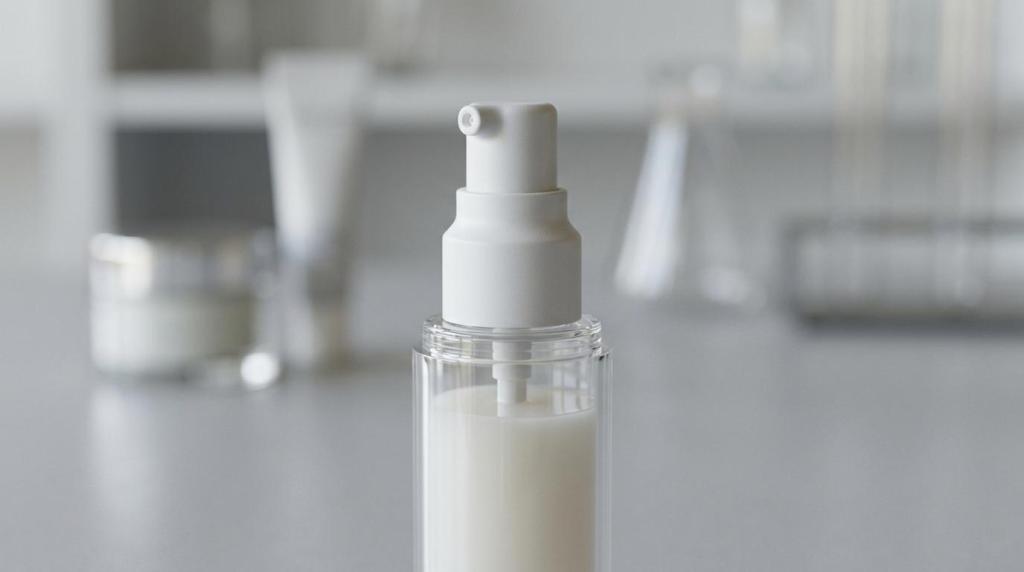
- Custom airless bottles with an OEM/ODM partner like Harmony Skin Lab: Best for serums and active treatments where oxidation, dosing, and hygiene matter.
- Standard airless pump bottles: Good product evacuation, strong premium feel, less finger contact.
- Glass dropper bottles: Useful for facial oils and some anhydrous blends; less ideal where repeated contact and leakage are concerns.
- PET or HDPE pump bottles: Practical for cleansers, toners, and body care with lower breakage risk.
- Jars: Suitable for thick creams, balms, and massage textures where scoop access matters.
- Tubes: Efficient for cleansers, sunscreens, and travel-friendly products with controlled dispensing.
- Refillable containers: Strong for premium positioning and repeat purchase models, but they need refill logistics and user education.
- Flexible sachets: Good for sampling, travel, professional treatment packs, and some refill concepts; lighter in material weight but often weaker on end-of-life recycling.
How do you choose packaging for a new serum, cream, or cleanser?
Start with the formula, then test user behaviour, then confirm production reality. Serums, creams, and cleansers rarely perform best in the same pack.
Too many launches start with a bottle shape found on social media. That is backwards. If the formula is sensitive to oxygen, an airless system moves up the shortlist. If the viscosity is high, some airless pumps may struggle to prime. If the product is used in wet hands, a jar may feel less hygienic than a tube or pump.
- Define the formula profile: Check viscosity, pH, active sensitivity, fragrance, colour stability, and whether the formula is better protected from air or light.
- Map the user and channel: A salon backbar product, a DTC serum, and a Sephora-style hero launch need different dosing, aesthetics, and shipping resilience.
- Validate the manufacturing fit: Confirm filling compatibility, label area, cap or pump lead times, and whether the MOQ still works for your launch size.
One practical mistake is leaving packaging selection until after stability work is done. Pack and formula should be screened together. If not, a stable formula in a lab beaker can become unstable in the wrong bottle.
“Harmony Skin Lab supports custom formulation, packaging design, filling and distribution support in one OEM/ODM process.”
Is an airless pump better than a jar for active skincare?
Usually yes. Airless pumps are generally better than jars for active skincare, while jars still suit dense creams and balms.
For products with exposure-sensitive ingredients, airless pumps reduce repeated air contact and finger contamination. That is why they are often chosen for serums, treatment creams, and premium daily-use products. KraveBeauty’s vacuum-sealed “egg packaging” is a useful market example of how airless concepts can improve product evacuation and reduce residue left in the bottle.
Jars still have a place. They work well for rich textures, overnight masks, and products where full access to the formula matters. The trade-off is clear. A jar can create a stronger sensorial experience, but it usually gives up some hygiene and protection. If a brand wants a jar look without direct finger dipping, spatulas or inner lids can help, though they add components and cost.
A common misconception is that airless always means better. It only means better when the pump matches the formula’s flow behaviour and the fill process is controlled properly.
Are refill pouches better than rigid bottles for sustainability goals?
Sometimes. Refill pouches can cut material use, but rigid bottles can be better for durability, refill cycles, and consumer handling.
This is where packaging design becomes a trade-off exercise rather than a slogan. Industry reporting says beauty generates an estimated 120 billion units of packaging waste annually, and sustainability claims linked to packaging have risen sharply. That explains why refillable packaging is gaining ground in skincare, bathcare, and haircare.
Still, lower material weight does not automatically mean a cleaner system. Flexible refill packs may use less material per unit, but many are harder to recycle because they combine layers or materials. Rigid refillable systems can ask for more material upfront, yet perform better over multiple refill cycles. Shiseido’s refillable LiquiForm dispenser is a notable benchmark, with reported reductions of around 56% in plastic and around 48% in CO2 emissions.
If your brand wants a refill model, ask a harder question early: will customers actually refill the product, or will the refill pack become a second disposable pack? The answer changes the business case.
How do you design skincare labels that fit HSA requirements?
Build the label around mandatory information first, then use the remaining space for branding. HSA rules should shape the artwork grid from the start.
Small packs often fail at the artwork stage, not the concept stage. A tube, jar, or sachet may look clean on screen, but once the ingredient list, batch code, country of manufacture, and responsible company details are added, the layout becomes crowded. That is why label planning is part of packaging design, not a final print task.
- Map the content first: Place the product name and function, full ingredient list, country of manufacture, responsible company name and address, and batch number before refining graphics.
- Reserve coding space: Keep a clear area for batch printing and, where minimum durability is under 30 months, the manufacturing or expiry date.
- Check the hierarchy: If there is outer packaging, use it well. If there is no carton, confirm the immediate packaging can carry all required details legibly.
A useful discipline is to run artwork approval only after regulatory, production, and design teams have checked the same file. That cuts late-stage relabelling risk.
“Harmony Skin Lab handles packaging design, printing, labelling and filling, which reduces artwork handoff errors between separate vendors.”
How do you prepare packaging data for NEA Mandatory Packaging Reporting?
Start collecting packaging bill-of-material data early. NEA reporting becomes far easier when every SKU already has a clean material and weight record.
Under Mandatory Packaging Reporting, producers of packaged products, including brand owners, manufacturers, and importers, must submit packaging data and 3R plans. Reports break packaging down by material type, packaging form, and corresponding weights. Companies with annual turnover exceeding S$10 million in 2024 must report their 2025 packaging data during the 1 January 2026 to 31 March 2026 submission window.
The practical workflow is straightforward. First, record each packaging component by material and form: bottle, cap, pump, carton, insert, sachet, shrink wrap. Second, capture weights consistently across all SKUs and variants. Third, link that data to a 3R plan so the business can show what it will reduce, reuse, or recycle.
A quiet advantage of disciplined packaging design is cleaner reporting later. If the pack uses fewer components and fewer mixed materials, both compliance work and sustainability planning tend to improve.
What packaging mistakes cause delays, waste, or reformulation?
Most packaging delays come from mismatch. Formula, label, and pack are often approved in isolation, then fail when combined.
One common error is choosing a hero pack before checking formula compatibility. Another is underestimating how much label content HSA requires, especially when the product has no outer box. Brands also run into trouble when they select a pump that cannot handle the formula’s viscosity, or a decoration finish that scratches during transport and ruins shelf quality.
There is also a commercial mistake many young brands make. They over-specify packaging for a first run. Heavy glass, multiple inserts, magnetic closures, and custom tooling can look strong in a pitch deck, yet slow down timelines and pressure margins. If your priority is market entry and product-market fit, a clean standard component with precise labelling often outperforms a dramatic pack.
When should a brand use OEM/ODM support for skincare packaging design?
Use OEM/ODM support when packaging decisions depend on formulation, compliance, and manufacturing at the same time. That is common in skincare.
A brand can manage packaging internally when the product is simple, the artwork is standard, and the supply chain is already stable. Once the project includes custom formulation, low MOQ planning, stability work, filling constraints, and packaging compatibility, cross-functional support becomes more valuable. That is especially true for start-ups, salon brands and clinics that want a product to launch cleanly rather than just look polished in samples.
“Harmony Skin Lab offers low-MOQ private label and customised skincare, which helps Singapore brands test a packaging direction before committing to larger runs.”
The benefit is not just convenience. It is risk control. If one partner can connect R&D, packaging selection, quality control, label design, filling, and distribution support, fewer assumptions get lost between vendors. In Singapore, where HSA labelling and commercial readiness are closely linked, that joined-up process often saves more time than brands expect.