A skincare launch may look like a branding exercise from the outside, but the real strength of the product is usually built much earlier in the lab.
When research and development is done well, it gives a launch more than a formula. It gives the brand a clearer concept, stronger technical grounding, better safety support, and a smoother path into manufacturing. For start-ups, salons, aesthetic clinics, and growing beauty brands, that can make the difference between a product that merely reaches the shelf and one that is ready for repeat orders.
Skincare research and development starts with a product brief
Strong skincare research and development often begins with a very practical question: what exactly is this product meant to do, and for whom?
That sounds obvious, yet many launch delays come from weak briefs. A brand may ask for a “hydrating serum” without defining texture, skin feel, active profile, price target, packaging type, or whether the formula is meant for home use, professional treatment support, or post-procedure care. R&D teams need that detail because every choice affects ingredient selection, testing plans, packaging compatibility, and cost.
A good brief gives formulation work direction. It can include the appearance, fragrance direction, target skin type, expected claims, benchmark products, price range, and intended market. It may also cover practical limits, such as paraben-free, SLS-free, mineral oil-free, fragrance-free, or vegan preferences.
After that initial discussion, the brief often becomes the working document for the full launch programme.
- texture and finish
- target skin concerns
- Price position: mass premium, clinic-grade, salon professional
- Packaging format: jar, tube, dropper, airless pump, sachet
- Geographical market: local launch, regional export, online-first rollout
This early R&D stage is also where feasibility becomes clearer. A brief may ask for high natural content, strong sensorial elegance, high active loading, and a low selling price all at once. Sometimes those goals can coexist. Sometimes they cannot. It is better for the technical team to identify trade-offs early than to force a formula into an unstable or commercially weak position later.
Formulation design connects concept to product performance
Once the brief is defined, formulation design turns marketing language into chemistry.
This is where ingredient choices are assessed not just by trend appeal, but by their technical, regulatory, and price aspects. A hero ingredient may sound impressive on a label, yet the real work lies in how it behaves in a full formula. Will it remain stable? Will it sit well with the preservative system? Will it affect colour, odour, viscosity, or pH? Will it still perform after scale-up?
A capable R&D team also considers how the product is supposed to feel on skin. Consumers do not only buy claims. They buy the first pump, the glide, the absorption rate, the finish, and the experience after several weeks of use. That means emulsifiers, humectants, emollients, rheology modifiers, and fragrance choices all matter, even when they are not the main story on pack.
Some manufacturers now support this work with digital tools. Harmony Skin Lab, for example, states that its R&D team uses customised computer software to simulate and predict chemical reactions and formulation function. Used properly, this kind of support can help teams refine concepts earlier and make formulation decisions with more confidence.
Here is how typical R&D activities support a launch:
| R&D activity | What it helps to prevent | Launch benefit |
|---|---|---|
| Product concept review | Vague positioning, unrealistic claims | Sharper market fit |
| Ingredient screening | Incompatibility, poor cost control | Better formula planning |
| Prototype formulation | Weak texture, poor absorption, instability | Stronger user experience |
| Stability testing | Phase separation, colour change, odour drift | Longer shelf confidence |
| Microbiological checks | Contamination risk | Safer product quality |
| Packaging compatibility | Leakage, clogging, material interaction | Better consumer usability |
| Scale-up trials | Lab formula failing in production | Smoother manufacturing transfer |
| Quality control planning | Batch inconsistency | More reliable repeat production |
A launch becomes far more resilient when each of these pieces is treated as part of one system, not as separate tasks passed from one vendor to another.
Safety substantiation in skincare research and development reduces launch risk
Safety is not a box to tick near launch day. It is one of the main pillars of skincare R&D from the start.
Regulatory authorities such as the FDA state that cosmetic products must be safe when used according to directions, or in the customary or expected way consumers would use them. They also make clear that the legal responsibility for safety rests with the manufacturer or distributor placing the cosmetic on the market. In simple terms, a product does not become safe because it looks premium or because individual ingredients are familiar. Safety has to be substantiated for the final product and its intended use.
That matters because the finished formula is what the customer experiences. Ingredients that are acceptable on their own may behave differently when combined. Concentration, pH, preservative choice, fragrance load, botanical variability, and interaction with packaging can all influence safety and quality.
Product testing can support this process. The exact testing route depends on the formula and market positioning, but the principle stays the same: brand owners need evidence that supports safe use. This is especially relevant for products aimed at sensitive skin, acne-prone skin, frequent use, or professional environments where skin may already be compromised. As GreenEtiq notes in its guide to gentle, perfume-free skincare, avoiding fragrance and certain common irritants often requires trade-offs in preservative systems and sensorial design that should be addressed early in the testing plan.
It is also worth remembering that most cosmetics do not go through premarket approval in the way medicines do, apart from certain exceptions such as colour additives in some systems. That places even more responsibility on the company bringing the product to market. Good R&D creates the documentation, data, and internal discipline needed to support that responsibility.
Stability testing and microbiological control protect product quality
A skincare product may look perfect in the first sample jar and still fail months later.
Stability testing helps predict how a formula will hold up over time under different storage and handling conditions. There is no single universal method for all cosmetics, and technical guidance reflects that. Creams, gels, powders, oils, masks, and water-based sprays behave differently. So do products packed in jars, pumps, sachets, or glass bottles. Temperature exposure, light, humidity, transport conditions, and repeated consumer use can all influence the result.
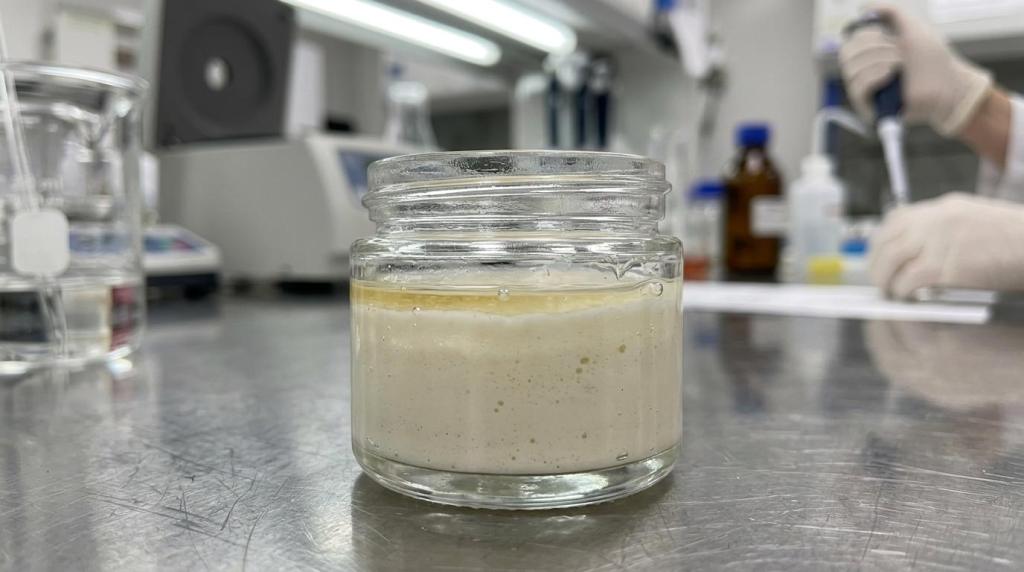
This is why stability work matters well beyond texture. It can reveal viscosity drift, phase separation, sedimentation, discolouration, fragrance shift, and packaging interaction. It also helps determine whether a product remains acceptable throughout its intended shelf life.
Microbiological control is equally important. Cosmetic products do not have to be sterile, but they should not contain harmful microorganisms, and microbial counts should remain within acceptable limits. Water-based formulas, in particular, need careful preservative strategy, sound manufacturing hygiene, and suitable packaging choices.
A product that performs well in efficacy terms but has weak microbiological control is not launch-ready.
Common issues that R&D and quality teams try to catch early include:
- Colour instability: actives or botanicals darken over time
- Odour shift: fragrance or base note changes during storage
- Viscosity change: gel becomes too thin or cream becomes too thick
- phase separation
- pump clogging
- microbial growth after repeated opening
These are not minor cosmetic flaws. They can affect consumer trust, returns, complaints, and the brand’s ability to scale.
Manufacturing controls turn a lab sample into a commercial product
A stable prototype is encouraging, but it is not the same as a manufacturable product.
Scale-up is where many attractive lab samples are exposed. Mixing speeds, heating and cooling conditions, batch size, filling temperature, filtration needs, and hold times can all alter the final result. A formula that feels beautiful at bench scale may behave differently in a larger vessel. That is why manufacturing readiness should be part of R&D planning, not a separate concern that appears after the formula has been “approved”.
This is where GMP discipline and quality control systems become commercially valuable. Consistency from batch to batch matters because repeat customers expect the same colour, scent, spreadability, and skin feel each time they repurchase. Brands also need confidence that packaging, labelling, filling, and finishing processes support product integrity, especially for premium positioning.
For growing brands, an integrated development-to-manufacturing setup can shorten decision cycles. When formulation, testing, quality control, packaging support, and production planning sit closer together, issues are often identified earlier. That can be especially helpful for lower MOQ launches, where budgets are tighter and each revision matters more.
Market readiness is part of skincare research and development too
A launch can be technically sound and still miss the market.
R&D supports market readiness by shaping products that make sense commercially, not only scientifically. That includes target price, ingredient story, texture expectations, packaging aesthetics, and whether the formula suits home users, professional salons, or aesthetic practices. A clinic-focused soothing gel and a retail anti-ageing cream may share some ingredients, but the development brief, sensorial design, claims framing, and format are rarely the same.
This is one reason brand-facing R&D often includes market research alongside formulation and testing. If the intended consumer expects a fast-absorbing, non-sticky finish in humid weather, that should be reflected in the prototype. If the product is meant for travel retail or sampling, sachet stability and filling performance become more relevant. If the launch is aimed at post-treatment care, safety positioning and gentle formulation logic need stronger emphasis.
Commercial success often starts with this kind of technical clarity.
What brand owners should prepare before starting skincare R&D
Brands usually get better outcomes when they arrive with clear priorities, even if the final formula is still open for discussion.
A useful way to start is to separate the non-negotiables from the preferences. If the product must be fragrance-free, suitable for acne-prone skin, and packed in an airless pump, say so early. If the scent direction or colour can change, note that too. This gives the R&D team room to make practical decisions without moving away from the brand’s core intent.
Before a development meeting, it helps to prepare:
- Product goal: hydration, barrier support, brightening, soothing, oil control
- Target user: teen skin, mature skin, sensitive skin, professional-use clients
- benchmark products
- Claims direction: lightweight, non-greasy, fast-absorbing, calming
- Commercial limits: target cost, MOQ, launch date, packaging preference
- ingredient exclusions
It also helps to ask direct questions during development.
- What evidence will support product safety before launch?
- Which stability testing plan: matches this formula type and packaging choice?
- How will scale-up: affect texture, appearance, and filling performance?
- What microbiological controls are expected for this product format?
- Which claims are realistic: based on the formula and available substantiation?
These conversations tend to save time, not add to it. They move a launch from guesswork to structured decision-making, which is exactly where strong skincare brands begin to stand apart.
When skincare research and development covers concept, formulation, safety substantiation, stability, microbiological quality, and production control together, launches tend to enter the market with more confidence and fewer surprises. That is good science, and it is also good business.