A cosmetic risk assessment is the documented evaluation of whether your finished product can be used safely under normal and reasonably foreseeable conditions. It looks at each ingredient’s hazard, how much of it reaches the consumer, and the margin between that exposure and the level at which harm is seen. In Singapore it sits inside the ASEAN framework, a qualified safety assessor signs it, and you, as the seller, stay responsible for it. “Cosmetic safety assessment” is the same exercise under a different name.
This guide explains the steps, the maths behind the margin of safety, who must do what in Singapore, and how to build the evidence file so that it holds up when the regulator asks.
TL;DR
- A risk assessment combines hazard (what an ingredient can do) with exposure (how much, how often, where on the body, and for whom).
- The margin of safety (MoS) divides a no-effect dose by the dose your consumer actually absorbs. A value above 100 is the usual benchmark.
- In Singapore, notification with HSA is not a safety endorsement. The safety judgement and the paperwork behind it are yours.
- A qualified Safety Assessor signs the report, and it belongs in Part IV of your Product Information File (PIF).
- Good formulation and manufacturing records make the assessment faster and more defensible.
Table of Contents
- What a cosmetic risk assessment actually is
- The information an assessor needs
- Step by step: how the assessment runs
- A worked illustration of the logic
- What Singapore requires, and who is responsible
- Records to keep: the PIF and beyond
- Manufacturing quality feeds the assessment
- Common gaps that slow an assessment
- Our perspective
- Working with a manufacturer on your assessment
- FAQ
- Sources
What a cosmetic risk assessment actually is
The legal starting point is simple. Under the ASEAN Harmonized Cosmetic Regulatory Scheme Agreement, a cosmetic placed on the market must not damage human health when applied under normal or reasonably foreseeable conditions. That judgement takes in the presentation, labelling, instructions for use and disposal, warnings and any other information the manufacturer or responsible person provides.
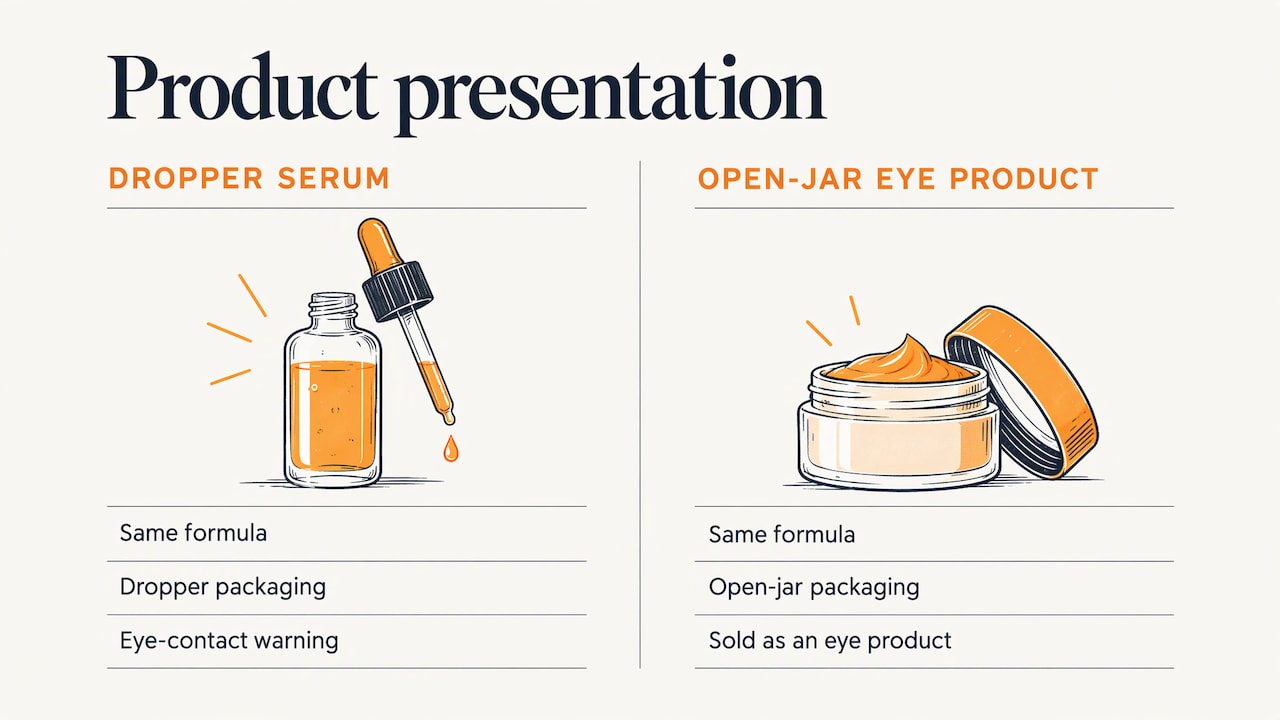
So the assessment is not only about the formula. A face serum with a clear “avoid contact with eyes” warning and a dropper is assessed differently from the same formula in an open jar sold as an eye product. Packaging, claims and instructions are part of the evidence.
The ASEAN guideline frames the work around the familiar equation of risk assessment: risk is hazard multiplied by exposure. A 2025 academic review of the ASEAN approach lists what the assessor considers: local and systemic effects, ingredient hazards, percentage of use, end use, margin of exposure, IFRA guidelines for fragrance, impurities and the final product assessment.
Risk assessment versus safety assessment
Readers type both terms, and in practice they describe one piece of work. The ASEAN safety assessment guideline treats the evaluation as a modern, data-driven analysis of available information and exposure conditions. It notes that choosing the right ingredient at an adequate concentration is enough to avoid major risks such as genotoxicity, carcinogenicity and systemic toxicity, and to a large degree sensitisation. That is why the assessment starts at formulation, not at the end of development.
The information an assessor needs
An assessor cannot judge what is not documented. Article 8 of the ASEAN Cosmetic Directive sets out what the PIF must hold, and the ASEAN PIF guidelines summarise it: qualitative and quantitative composition, raw-material and finished-product specifications, a manufacturing method compliant with ASEAN GMP, a human-health safety assessment, data on undesirable effects, and support for claimed benefits.
In practice, collect these before the assessor begins:
- Full formula with percentages, including preservatives, fragrance and any botanical extracts.
- Raw-material specifications and supplier documents, including impurity profiles.
- Finished-product specifications: appearance, pH, viscosity, microbiological limits.
- Packaging details: material, opening type, dosing, size.
- Intended use: where on the body, how much, how often, by whom.
- Claims and label text, including warnings.
- Stability and compatibility data, covered in our guide to cosmetic stability testing.
If a safety data sheet is part of your supply chain paperwork, our note on cosmetic SDS requirements in Singapore covers what brands need to hold.
Step by step: how the assessment runs
1. Identify the hazards of each ingredient
The assessor reviews the toxicological profile of every ingredient and impurity. Under EU rules, the toxicological profile of the safety report gives particular attention to local toxicity (skin and eye irritation), skin sensitisation and, for UV absorbers, photo-induced toxicity, as set out in Annex I of Regulation (EC) No 1223/2009. The ASEAN guidance reviewed in the 2025 J-STAGE article likewise calls for attention to eye irritation and to photo-toxicity or photo-allergy in sunscreens.
For botanical ingredients, the same review notes that ASEAN guidance uses a tiered approach, including history of safe use (HOSU) and the threshold of toxicological concern (TTC). This matters for brands working with plant oils and distillates, where the composition varies by batch and origin.
2. Estimate consumer exposure
Exposure is where two products with an identical formula can end up with different verdicts. The EU annex requires exposure data to consider the site of application, skin surface area, amount applied, duration and frequency of use, exposure routes and the targeted population, including any specific groups likely to be exposed.
A rinse-off cleanser touches the skin briefly. A leave-on body lotion covers a large area daily. A lip product may be partly swallowed. Each pattern changes the calculation.
3. Calculate the margin of safety
For systemic effects with a threshold, the SCCS Notes of Guidance (12th revision, 2023) define the margin of safety as the ratio between a point of departure for systemic exposure and an estimate of the exposure:
MoS = PoDsys / SED
- PoDsys is usually a NOAEL (no observed adverse effect level) or a benchmark dose from oral studies, adjusted for the share of the substance that is absorbed systemically.
- SED is the systemic exposure dose: the amount of the ingredient your consumer absorbs per kilogram of body weight per day.
The same guidance states that the NOAEL is mainly derived from a 90-day repeated dose animal study or a reproductive toxicity study, and that the benchmark dose approach should preferentially be used. When the point of departure rests on a LOAEL instead, an additional assessment factor of 3 is often added, and up to 10 may be applied case by case.
4. Interpret the number
A MoS above 100 is the benchmark commonly treated as acceptable. A regional example: when the ASEAN Cosmetic Committee reviewed benzophenone-3 at its 38th meeting, the MoS was calculated at more than 100 for all cosmetic categories, so use with a restricted limit was considered safe.
A MoS below 100 does not automatically mean the product fails. It tells the assessor to look closer: lower the concentration, change the product type, add a warning, or find better data.
5. Characterise the final product
Ingredient-by-ingredient maths is only part of the job. The assessor also reviews impurities and trace contaminants, fragrance allergens, the interaction of ingredients, the stability and microbiological quality of the finished product, the packaging and the label. The conclusion is a signed statement on whether the product is safe for its stated use.
A worked illustration of the logic
This example uses invented round numbers purely to show the arithmetic, not a real ingredient.
Suppose an ingredient has a systemic NOAEL of 50 mg/kg body weight per day. Your leave-on cream contains 1% of it, and the assessor estimates the consumer applies enough cream per day to absorb a systemic dose (SED) of 0.2 mg/kg per day. The MoS is 50 divided by 0.2, which gives 250. That sits comfortably above 100.
Now imagine you decide to market the same cream as a body product used over a much larger area, or double the concentration. The SED rises, perhaps to 1 mg/kg per day, and the MoS drops to 50. The formula has not changed in kind, but the use has, and the assessment must be redone. This is why the intended use is fixed before the assessor starts.
What Singapore requires, and who is responsible
The framework
The ASEAN Cosmetic Directive has applied in Singapore since 1 January 2008. It harmonises cosmetic requirements across ASEAN and comes with ingredient annexes, labelling requirements, GMP guidelines, safety assessment guidelines, adverse event guidance, PIF guidelines and contaminant limits. Our overview of the ASEAN Cosmetic Directive for Singapore brands goes through each part.
Notification is not approval
Manufacturers and importers must notify HSA through PRISM before supplying a product, and each notification is valid for one year, so it must be renewed annually. HSA is explicit that the acknowledgement is not an endorsement or certification of the product’s safety or quality. The seller must ensure the product contains no adulterants or prohibited substances and stays within the limits for restricted substances.
HSA describes its own approach, in a presentation at the One Asia Beauty Forum, as light-touch and based on prescribed standards, with the onus on dealers. Put plainly, nobody checks your safety assessment before launch, which makes a thorough one your own protection. For the notification process itself, see our practical guide to HSA cosmetic notification.
Who signs the assessment
The ASEAN guideline requires the safety assessment to be performed by a qualified professional, defined as the Safety Assessor. The assessor should hold a qualification in a relevant field such as pharmacy, toxicology, dermatology or medicine, or a similar discipline, and be suitably trained in cosmetic safety assessment. The assessor need not be a company employee, so brands without in-house toxicologists can engage one externally.
Exports only
The Singapore regulations do not apply to a product manufactured in Singapore solely for export, or imported solely for re-export. The destination market’s rules still apply to you in that case, so plan the assessment around where the product will be sold.
Records to keep: the PIF and beyond
The ASEAN PIF guidelines suggest organising the file in four parts:
| Part | Contents |
|---|---|
| Part I | Administrative documents and product summary |
| Part II | Quality data of raw materials |
| Part III | Quality data of the finished product |
| Part IV | Safety and efficacy data |
Part IV should hold the signed safety assessment report, the assessor’s CV, the latest compiled report on confirmed or recorded adverse events, and signed efficacy reports that support on-pack claims. Our article on product information files and staying audit ready explains how to keep it current.
Other obligations that follow from HSA’s notification guidance:
- Keep supply records for two years.
- Provide safety and technical information when HSA requests it.
- Monitor and report adverse events and recalls as soon as possible.
- Recall any product found to have safety concerns.
For serious adverse effects, HSA’s presentation sets timelines. If an effect is life-threatening or causes death, inform HSA no later than 7 days after first becoming aware, with a detailed report within 8 days after the initial report. If it results in hospitalisation or persistent or significant disability, a detailed report is due no later than 15 days after first becoming aware. Confirm the current wording on the HSA site, and talk to HSA directly if you face a real incident.
Manufacturing quality feeds the assessment
An assessment is only as reliable as the product it describes. If the batch you sell differs from the batch that was assessed, the conclusion no longer applies. This is where GMP matters. Under Singapore’s Health Products (Good Manufacturing Practice Certificate, Cosmetic Products) Regulations 2011, a GMP certificate attests conformity with HSA’s GMP guidelines for cosmetic manufacturers and is valid for no more than three years from the date of assessment. Read more in our piece on HSA GMP and skincare manufacturing standards.
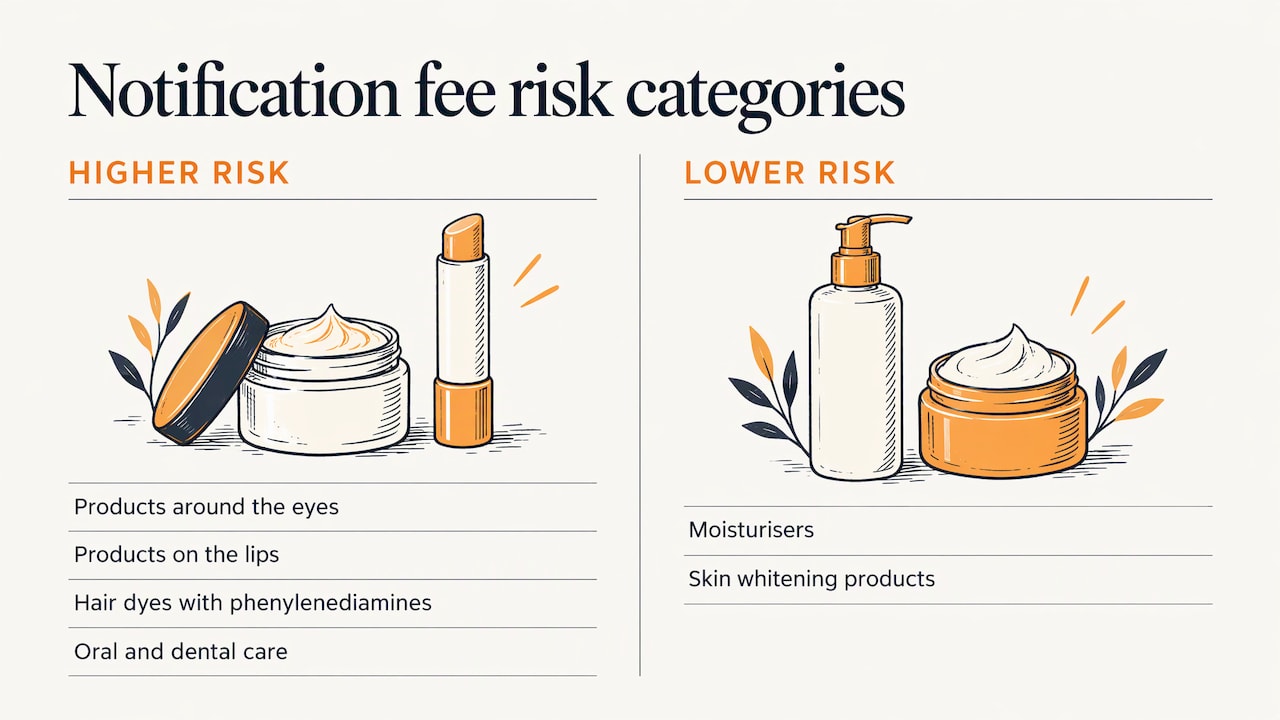
Risk level also affects cost. According to a Singapore law firm’s retail guide, products around the eyes, on the lips, hair dyes containing phenylenediamines, and oral and dental care products count as higher risk for notification fees, while moisturisers and skin whitening products are lower risk. Higher-risk categories also deserve a closer look in the safety assessment.
Common gaps that slow an assessment
- Formula changes after sign-off. A new fragrance, preservative or supplier needs a review.
- Vague intended use. “Face and body” is a different exposure scenario from “face only”.
- Missing impurity data for natural extracts and essential oils.
- Claims without evidence. Efficacy support sits in the same part of the PIF as the safety report.
- No product liability planning. Our guide to product liability insurance for cosmetics in Singapore covers the cover that complements a sound assessment.
Our perspective
We see the risk assessment as a design tool first and a document second. The cheapest time to fix a safety question is while the formula is still on the bench, before packaging is printed and before a launch date is promised.
That is why we work with clients on formulation, specifications, quality control and packaging in one collaborative process. Our GMP certification from Singapore’s HSA means the product described in your file is made under a documented system, so the batch your customers use matches the one that was assessed.
Whether you are building a home-use line, a professional salon range or an aesthetic formulation for a clinic, we start with who will use the product, where and how often. That answer shapes the ingredient choices, the concentrations and the packaging, and it makes the assessor’s work faster.
Edmund
Working with a manufacturer on your assessment
If you are launching a private label or professional skincare line, we can take the product from concept through R&D, formulation, quality control and packaging, with the documentation your safety assessor needs organised along the way. See our R&D, manufacturing and packaging services, or read about our skincare product development service to see how a project runs.
We also work with salons and clinics: see our pages on professional salon skincare manufacturing and aesthetic skincare for clinics. To plan the whole path to market, start with our skincare launch roadmap.
FAQ
Is a cosmetic risk assessment mandatory in Singapore?
Yes, in effect. The ASEAN framework requires a human-health safety assessment in the product information file, and the seller is responsible for the product’s safety. HSA can request safety and technical information at any time, so the assessment should exist before you supply the product.
Who can carry out a cosmetic safety assessment?
A qualified Safety Assessor, as defined in the ASEAN guideline. Relevant qualifications include pharmacy, toxicology, dermatology or medicine, plus suitable training in cosmetic safety assessment. The assessor does not need to be your employee, so you can use an external professional.
What is a good margin of safety for a cosmetic ingredient?
The common benchmark is a MoS above 100, calculated as the point of departure for systemic exposure divided by the systemic exposure dose, as described in the SCCS guidance. The assessor still judges the full context: data quality, product type, user groups and any additional assessment factors.
Does HSA notification prove my product is safe?
No. HSA states that the notification acknowledgement is not an endorsement or certification of safety or quality. Notification is a regulatory step, and safety evidence is your own responsibility.
Do I need to repeat the assessment when I change the formula?
Yes, a change in ingredients, concentrations, packaging or intended use alters hazard or exposure, so the assessor should review it. Keep the signed update in Part IV of your PIF alongside the earlier version.
Sources
- ASEAN Harmonized Cosmetic Regulatory Scheme Agreement
- ASEAN Guidelines for Product Information File
- Regulation (EC) No 1223/2009, Annex I
- ASEAN Guidelines for Safety Assessment of Cosmetic Products (NPRA Malaysia)
- ASEAN Annex I Part 6, Guideline for Safety Assessment of Cosmetic Products
- J-STAGE 2025 article on ASEAN cosmetic safety assessment
- SCCS Notes of Guidance, 12th revision (2023)
- Philippines FDA: updates from the 38th ASEAN Cosmetic Committee meeting
- HSA: ASEAN Cosmetic Directive
- HSA: Submit notification and re-notification
- HSA presentation, One Asia Beauty Forum
- Health Products (Good Manufacturing Practice Certificate, Cosmetic Products) Regulations 2011
- Health Products (Cosmetic Products, ASEAN Cosmetic Directive) Regulations 2007
- Dentons Rodyk: the sale of cosmetic products in Singapore