Microbiome skincare formulation means designing a product that works with the microbes living on skin rather than against them. In practice, that means mild cleansing systems, a skin-compatible pH, a carefully built preservation system, and, if you want to say “microbiome-friendly” on the label, evidence that the finished product earns the claim. This guide walks brand owners, salons and clinics through each decision, including what Singapore’s regulator expects.
TL;DR
- A microbiome-friendly formula is built around mild surfactants, a pH of about 4.5 to 5.5, and hurdle-style preservation, with the claim checked on the finished product.
- Prebiotics feed skin microbes, probiotics are live organisms that are hard to formulate, and postbiotics are non-living products of fermentation that are easier to stabilise.
- Preservation (ISO 11930 challenge testing) and microbiome compatibility are two separate questions, and you need answers to both.
- In Singapore, claims must stay within the cosmetic definition and be backed by evidence, and every product is notified through PRISM before supply.
- Working with a GMP-certified OEM/ODM manufacturer early lets you settle ingredients, testing and labelling before launch.
Table of Contents
- What the skin microbiome is and why formulators care
- What “microbiome-friendly” can reasonably mean
- Prebiotics, probiotics and postbiotics in skincare
- Core formulation decisions
- Testing: preservation, compatibility and stability
- What manufacturing involves
- Singapore rules for formulas, labels and claims
- Our perspective
- Take your microbiome line from brief to batch
- FAQ
- Sources
What the skin microbiome is and why formulators care
The skin is home to bacteria, fungi and other microbes. The microbiota is the community of organisms itself, while the microbiome refers to their collective genome. According to a 2022 review of skin barrier function and the microbiome, these microbes interact with the skin physically, chemically and through the immune system, and they significantly affect barrier function.
The habitat is large. A 2021 minireview notes that human skin offers nearly 30 m² of diverse microbial habitat. The same review points to cooperation between microbes, skin cells and the immune system as the basis of skin health.
Two functions matter most to a formulator:
- Barrier support. A 2023 review in the International Journal of Molecular Sciences describes how the skin’s microbiota influence the physical barrier, including keratinocyte differentiation, stratum corneum formation and the regulation of intercellular contacts.
- Colonisation resistance. A 2020 review identifies this as an essential function: resident microbes limit pathogens through antimicrobial peptides and by signalling to skin cells to mount protective responses.
For a brand, the takeaway is practical. Everything in a formula, from the cleanser base to the preservative, touches this ecosystem. A product that leaves it undisturbed is a sensible design goal.
What “microbiome-friendly” can reasonably mean
The phrase is popular, but it has no single legal definition. Testing company Eurofins describes it as a product verified to maintain, support or avoid disrupting microbiome composition, diversity and performance under normal use. It adds that compatibility should be established for the finished product, not assumed from ingredient history. A gentle, plant-based formula can still disturb commensal microbes depending on concentration, preservation method or pH.
Researchers have proposed a framework. In a 2023 paper in Frontiers in Microbiomes, van Belkum and colleagues argue that friendliness should be defined through serial in vitro, ex vivo and in vivo experiments. Full validation needs complete in vivo assessment using metagenomic sequencing of untreated and product-exposed skin. For early screening they suggest a threshold: no more than +75% and no less than -25% change in growth of any resident species after 4 hours at 37°C. They also recommend using the term restrictively, and propose a scoring scale that shows how far a product has been tested.
This gives you a ladder of claims:
- Formulated with microbiome in mind. Describes design choices (mild surfactants, buffered pH). It makes no performance promise.
- Compatible in vitro. Backed by strain-panel data on resident microbes.
- Shown in vivo. Backed by sampling and sequencing on volunteers using the finished product.
Choose the rung you can support, and word the label to match it.
Prebiotics, probiotics and postbiotics in skincare
These three terms are often mixed up on labels. A 2026 review in Cosmetics, The Skin Microbiome Revolution, sets out the distinctions.
| Category | What it is | Formulation consideration |
|---|---|---|
| Prebiotics | Non-living compounds, often non-digestible carbohydrates, that act as selective food for skin microbes. Commensal bacteria turn them into short-chain fatty acids that lower skin pH. | Generally easy to add to water-based formulas. |
| Probiotics | Live microorganisms. | Hard to keep alive alongside surfactants, chelating agents, glycols, preservatives and fragrance. |
| Postbiotics | Non-viable cells, fragments or metabolites, such as fermentation filtrates, lysates, exopolysaccharides, organic acids and peptides. | Their non-living nature brings advantages in stability, safety and regulatory compliance. |
The probiotic challenge is well documented. A 2022 review names keeping microorganisms alive in a water-based formula as the first hurdle. Solutions include encapsulation, or packaging that keeps the living bacteria separate until the moment of use. The industry guidance from the IFSCC and the Personal Care Council adds that standard preservative systems will likely render probiotic strains inert, so preservation has to be planned around the strain from the start.
Postbiotics avoid much of this. A 2023 review reports that they offer a defined chemical composition, no capacity to transfer antibiotic resistance and longer shelf life than probiotics. For a first product, a prebiotic or postbiotic approach is usually the more straightforward route.
On evidence, a 2024 review of 14 clinical trials found that defined probiotic or postbiotic strains were associated with hydrated skin, increased radiance, reduced wrinkle depth and normalised commensal microbiota. The same literature cautions that vague wording is not enough: “containing probiotics” or “probiotic lysate” should be replaced by an identified strain with documented properties in peer-reviewed publications. So name the strain or ingredient, and keep the claim to what its data shows.
Core formulation decisions
Most of the work in a microbiome-conscious formula is in the base, not in a headline ingredient.
Surfactants and cleansing
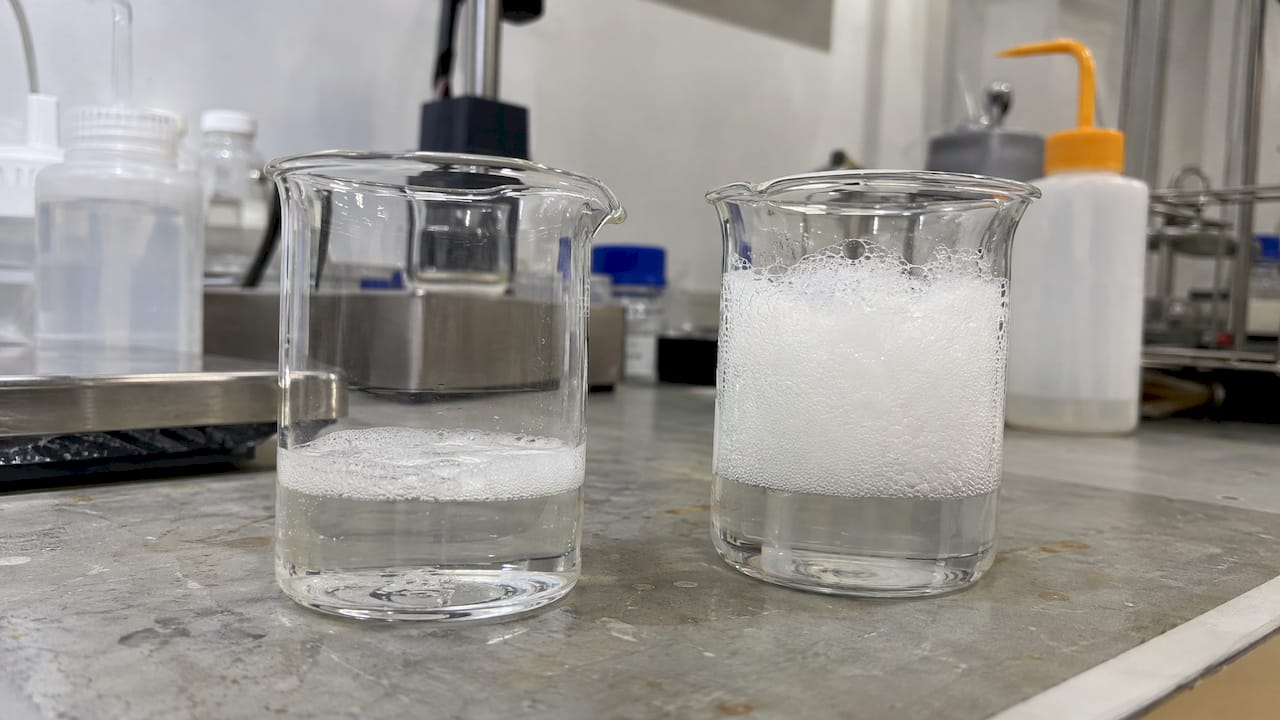
Cleansers are where disruption is most likely, because they act on the whole skin surface. Eurofins lists mild surfactants as a core approach. In practice, formulators weigh gentler anionic or amino-acid-type systems against harsher high-foaming ones, then test the result. The same logic applies to emulsifiers in creams and lotions, which we cover in our guide to emulsifier selection.
pH
Skin is naturally acidic, and the buffering target cited for these formulas is a physiological pH of 4.5 to 5.5. Set the pH early, because it also affects preservative performance and ingredient stability.
Preservation
Every water-containing cosmetic needs protection against contamination. Hurdle technology combines several mild measures (pH, water activity, a modest preservative load and multifunctional ingredients) instead of relying on one strong biocide. Preservatives are not automatically a microbiome problem: an in vivo study of four preservative systems in full formulations on healthy adult women found that the skin microbiome was not impacted under normal use, despite antimicrobial efficacy in the lab. Our article on natural preservatives and how to build a system that passes testing goes deeper on the practical side.
Delivery and texture
If you want live probiotics, expect an anhydrous base, encapsulation or a two-part pack. If you choose postbiotics or prebiotics, a standard emulsion or serum base usually works. Packaging choice then matters for stability, which is why we ask brands to consider packaging compatibility testing alongside the formula.
Testing: preservation, compatibility and stability
Three different questions need three different sets of evidence.
1. Is the product safely preserved? This is a consumer-safety requirement for every product. The challenge test under ISO 11930:2019 inoculates the formula with five test microorganisms at roughly 10⁵ to 10⁶ CFU/g and monitors log reduction over 28 days, then compares results against criteria A or B. See our guide to cosmetic microbiological testing.
2. Is it microbiome-compatible? This is a claim endpoint, needed only when you make the claim. A 2026 article from Cosmetic Science Lab separates the two clearly: preservation is always required, while microbiome compatibility is required whenever the claim is made, supported by in vitro strain panels or in vivo sampling and sequencing. Substantiation can also include metagenomic sequencing before and after use and assessment of antimicrobial activity at the in-use concentration, as Eurofins outlines.
3. Does it stay stable? Stability work covers real-time or accelerated ageing, freeze-thaw cycling, temperature swings and photostability, as SGS Singapore describes. Read more in why stability testing matters in skincare manufacturing. For skin tolerance and efficacy evidence, see our pieces on efficacy testing methods and compatibility testing.
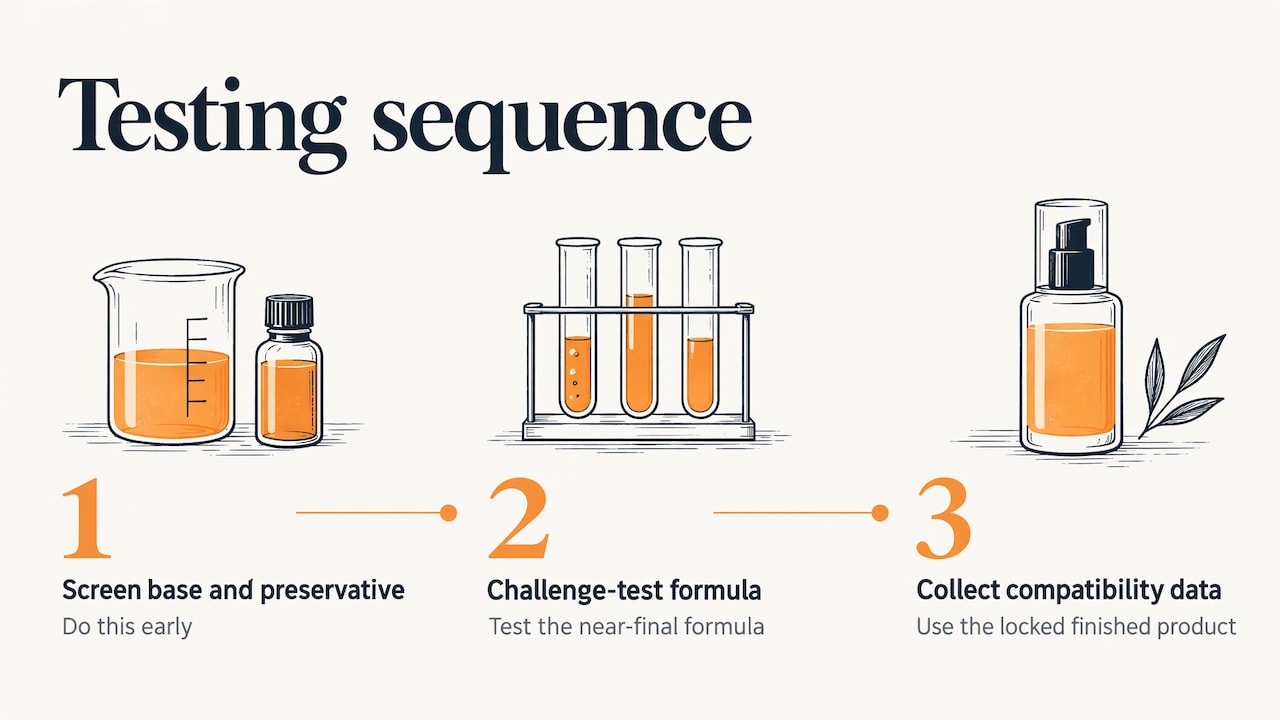
A sensible sequence for a new line: screen the base and preservative system early, run the challenge test on the near-final formula, then commission compatibility data on the finished product once the formula is locked. Changing a surfactant or preservative later can invalidate earlier results.
What manufacturing involves
A good formula can still fail in production. For microbiome-oriented products, a few points deserve attention at the manufacturing stage:
- Strain purity. For probiotic cosmetics, the IFSCC guidance says manufacturers should ensure the strain is free of contaminating strains, especially pathogens, set a use-life, define storage conditions and give clear use instructions and cautions on the label.
- Postbiotic release checks. Postbiotic production typically runs from a small bioreactor to a larger stirred tank, then centrifugation, filtration and homogenisation. A 2023 review notes that a negative cell viability test must confirm no viable cells remain before market release. If you buy a postbiotic ingredient, ask your supplier for this documentation.
- Batch consistency. pH, viscosity and preservative levels should be checked batch by batch, since drift can undo the design.
- Filling and packaging. Clean filling and suitable containers protect both preservation and stability.
Our custom skincare formulation process and guide to developing a formulation that sells show how these steps fit from concept to production.
Singapore rules for formulas, labels and claims
If you sell in Singapore, the Health Sciences Authority (HSA) sets the framework. According to its regulatory overview of cosmetic products, cosmetics must comply with the Health Products Act 2007 and the ASEAN Cosmetic Directive regulations, and formulas must meet the directive’s ingredient annexes. A manufacturer’s licence is not required, though GMP certification can be applied for.
Key points for a microbiome line:
- Claims. Advertisements cannot claim to modify a physiological process or to prevent or treat a disease or medical condition. Claims must fit the cosmetic definition and be justified by scientific evidence or the formulation, with substantiation available on request. Wording such as “formulated to respect the skin’s natural balance” sits more safely than anything that implies treating a condition such as eczema or acne.
- Notification. Products are usually notified through PRISM before supply. The HSA notes that each notification is valid for one year and acknowledgement is not an endorsement of safety or quality.
- Labels. Under Regulation 7, labels must carry the product name and function, ingredients in descending order of weight, metric contents, batch number, the Singapore responsible person’s name and address, country of manufacture, precautions and an expiry date if durability is under 30 months. The manufacturing date is needed unless an expiry date is stated.
Check the HSA pages for the current requirements before finalising artwork, since rules and procedures can be updated.
Our perspective
We see the same pattern with new brands: the idea starts with a trending ingredient, but the product succeeds or fails on the base around it. Surfactants, pH, preservation and packaging decide whether the formula behaves on real skin and on a real shelf.
That is why we work with clients from the first brief. As a GMP-certified manufacturer in Singapore, we treat research and development as a shared process: your market, your customers, and our formulation and quality control teams, in one conversation. Our approach is to match the claim to the evidence you hold, so the label is something you can stand behind.
Whether you are building a home-use range, a professional salon line or a doctor’s formulation, the same discipline applies. Choose ingredients you can name and document, build the base to be gentle, and test the finished product.
Edmund
Take your microbiome line from brief to batch
Harmony Skin Lab is an OEM/ODM skincare manufacturer in Singapore. We handle research and development, customised formulation, quality control, design and packaging for private label, salon and medical skincare lines. You can see the full range on our services page, or read how R&D supports product launches.
If you have a microbiome-focused concept, tell us the audience, the format and the claim you hope to make. We will help you shape a formulation and a testing plan to match. Start with our Singapore OEM manufacturing page.
FAQ
Can I call my product microbiome-friendly without testing?
The phrase has no single legal definition, but in Singapore any claim must be justified by scientific evidence or the formulation, and substantiation must be available if HSA asks. Researchers recommend that the term be used restrictively and tied to testing of the finished product. Describing your design choices accurately is the safer route if you have no data yet.
Are probiotics or postbiotics easier to put in a skincare product?
Postbiotics are generally easier. They are non-living, so they offer advantages in stability, safety and regulatory compliance, while live probiotics must survive surfactants, preservatives and water. Probiotics often need encapsulation or a two-part pack, and their preservation has to be planned around the strain.
Does preserving a product harm the skin microbiome?
Not necessarily. An in vivo study of four common preservative systems in full formulations found no impact on the skin microbiome under normal use. Preservation is still a separate safety requirement, proven by ISO 11930 challenge testing, and it does not replace microbiome compatibility data.
What pH should a microbiome-conscious product have?
The approach cited for these formulas is buffering to a physiological pH of 4.5 to 5.5. The right target for your product also depends on the ingredients and preservative system, so it is set and verified during development.
Do I need to notify a microbiome skincare product in Singapore?
Yes, in most cases. Cosmetic products are notified through HSA’s PRISM system before they are supplied, and each notification lasts one year before re-notification. Your manufacturer or responsible person can guide you through the process.
Sources
- Skin Barrier Function and the Microbiome (PMC, 2022)
- Living in Your Skin: Microbes, Molecules, and Mechanisms (PMC, 2021)
- Are the Cutaneous Microbiota a Guardian of the Skin’s Physical Barrier? (MDPI, 2023)
- The Skin Microbiota: Balancing Risk and Reward (PMC, 2020)
- Validating Microbiome-Friendly Claims (Eurofins)
- Being friendly to the skin microbiome (Frontiers in Microbiomes, 2023)
- The Skin Microbiome Revolution (MDPI, 2026)
- Cosmeceuticals: A Review of Clinical Studies (PMC, 2024)
- Advances in Microbiome-Derived Solutions and Methodologies (PMC, 2022)
- In-vivo impact of common cosmetic preservative systems (PMC, 2021)
- ISO 11930:2019 sample
- Microbiome-Friendly Claims: Preserve Well and Still Prove It
- Stability Testing (SGS Singapore)
- Skin Microbiome: an Informational Guidance (IFSCC / Personal Care Council, 2025)
- Production, Formulation, and Application of Postbiotics (MDPI, 2023)
- Regulatory overview of cosmetic products (HSA)
- Submit notification and re-notification (HSA)
- Health Products (Cosmetic Products, ASEAN Cosmetic Directive) Regulations 2007 (Singapore Statutes Online)