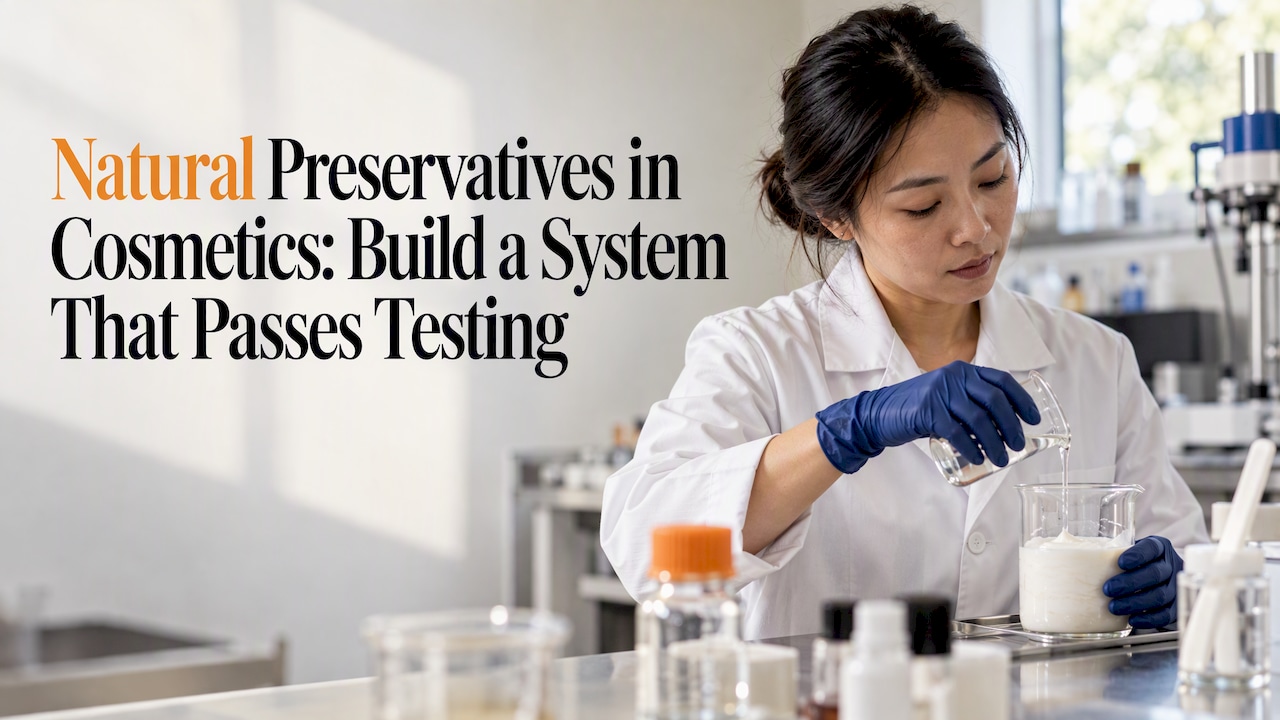
Natural materials can contribute to preservation, but you should treat them as part of a validated, multi-factor system, not a drop-in standalone preservative. Start with multifunctional ingredients, design formulation hurdles around water, pH and packaging, and schedule adapted challenge testing under GMP before you commit to a launch batch.
TL;DR:
- Water rich creams and lotions in jars need broad spectrum protection; anhydrous oils, sachets, sealed pumps, and low water serums may carry less microbial risk.
- Essential oils and plant extracts can lose potency when diluted, depend on pH, or add unwanted odour, so test them as partners, not sole protection.
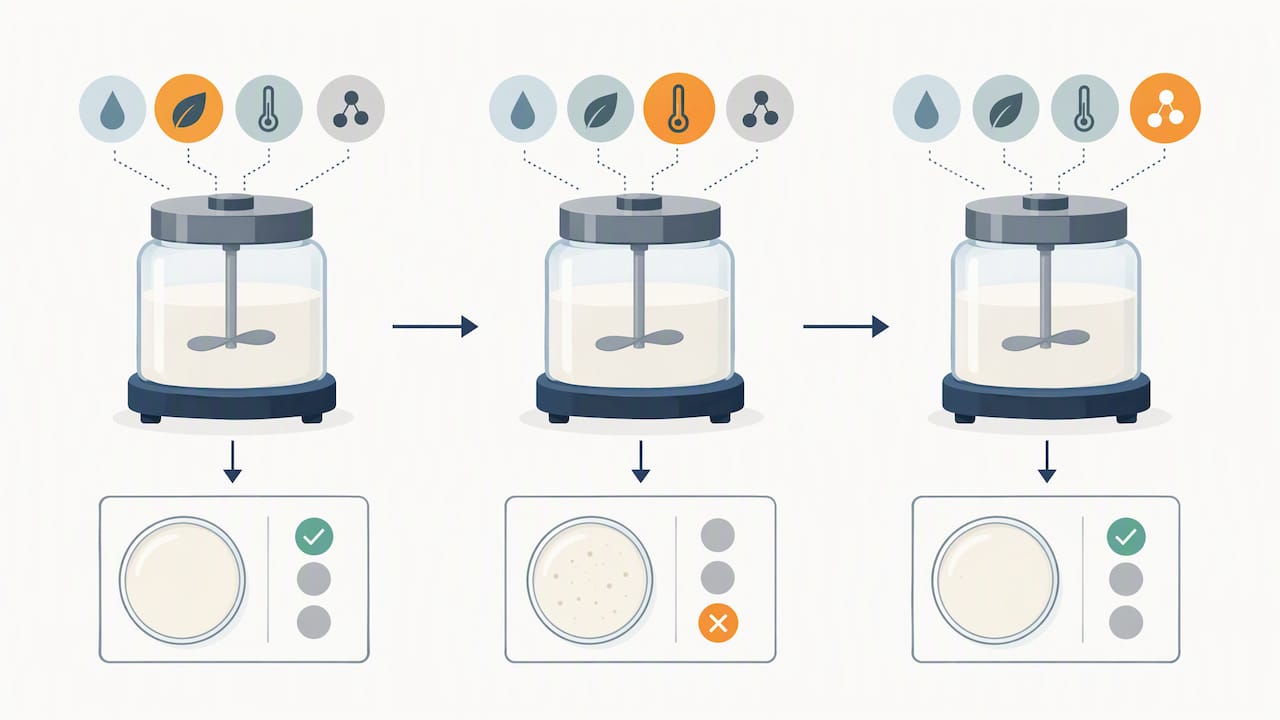
- Pair glyceryl caprylate with caprylyl glycol as a starting point, then add one botanical or organic acid and adjust pH; change one hurdle per trial.
- ISO 11930 challenge testing covers five reference organisms, but botanical formulas should also include environmental isolates and organisms found on raw materials.
- Validate production batches with challenge and stability tests at accredited labs, while maintaining GMP, raw material checks, batch release testing, and compliance with preservative rules.
Table of Contents
- What natural preservatives are and how they act
- Which product formats can go natural-lean, and which cannot
- How to build a natural-lean system with hurdle technology
- Validation: challenge testing and regulatory expectations
- Manufacturing and packaging controls that protect the formula
- Why preservation belongs in formulation engineering
- Taking a natural preservative concept into validated production
- FAQ
- Sources
What natural preservatives are and how they act
The phrase covers several families of antimicrobial materials, each with its own mechanism and practical role:
- Essential oils (tea tree, thyme, rosemary, lavender, cinnamon) are among the botanicals most reported in natural antimicrobial reviews, and often double as fragrance.
- Plant polyphenol extracts (green tea, cranberry) are natural compounds with reported antimicrobial and antioxidant properties.
- Organic acids and salts (benzoic, levulinic systems): may be used as part of a preservation system, with performance depending on formula pH.
- Antimicrobial peptides: may be used as co-preservatives.
- Chitosan and ε-polylysine: materials studied for their potential antimicrobial role.
- Microbial metabolites: fermentation-derived compounds used alongside other agents.
Regulatory status matters here. A multifunctional ingredient that happens to have antimicrobial activity is not the same as a labelled preservative, and your claims and your validation should reflect which one you are actually relying on.
Which product formats can go natural-lean, and which cannot
Format and use pattern decide how much risk you carry, and the limits of botanicals bite hardest in water-rich products.
- High-risk formats: water-rich creams, lotions and gels in multiple-use jars, especially anything a finger enters. These normally need robust broad-spectrum preservation.
- Lower-risk formats: anhydrous oils, single-use sachets, sealed pump formats and low-water serums backed by process controls. Where a product creates a hostile environment for microbes and is made to GMP, risk assessment under ISO 29621 may support fewer or no listed preservatives, though your controls and testing decide suitability.
- Technical limits: essential oils and extracts are often pH-dependent, volatile and odorous, and lose potency on dilution. Their performance can be limited, and their odour may be undesirable in some products.
- Preservative-free is rarely realistic: the same review notes that a truly preservative-free claim is seldom feasible, so plan for a system, not a single hero ingredient.
How to build a natural-lean system with hurdle technology
Hurdle technology and self-preserving strategies stack several modest barriers so no single one has to carry the load, alongside GMP and microbiological controls. Work through the hurdles in this order:
- Water activity: use humectants such as glycerin and glycols to bind free water.
- pH: set the formula where your chosen acids and extracts perform, and confirm it holds through shelf life.
- Chelation: use an EDTA alternative to weaken microbial defences and stabilise the system.
- Antioxidants: protect botanicals and oils so the actives you rely on do not degrade.
- Multifunctionals: glyceryl caprylate and caprylyl glycol can be used as part of a preservation system.
- Packaging: airless dispensers, single-use sachets, pump bottles and tamper-sealed pouches cut headspace and finger contact.
For starting pairings in the lab, try a multifunctional such as glyceryl caprylate with caprylyl glycol, then add one botanical or organic acid and adjust pH around it. Treat these as bench starting points, not validated claims.
Pro Tip: Change one hurdle at a time between trials and keep a log. When a batch fails, you will know which variable to blame.
Validation: challenge testing and regulatory expectations
ISO 11930 challenge testing uses five reference organisms:
- Staphylococcus aureus
- Escherichia coli
- Pseudomonas aeruginosa
- Candida albicans
- Aspergillus brasiliensis
For botanical formulations, experts recommend adapted challenge tests that add environmental or raw-material-associated organisms, because real contamination rarely looks like a reference strain. Add those isolates to the panel rather than relying on the standard five alone.
Validate production batches, not just bench prototypes, and use an accredited third-party lab for challenge and stability work where you need independent evidence. Our guide to cosmetic microbiological testing covers the practical methods.
On the regulatory side, suppliers carry responsibility for product safety across the lifecycle, and the HSA advisory for suppliers of cosmetic products requires compliance with ASEAN cosmetic regulations, including allowed preservatives and restrictions.
Manufacturing and packaging controls that protect the formula
Preservation depends on both formulation and process: poor GMP and a contaminated production environment will sink a well-preserved formula. Build these controls into every run:
- Environmental control and validated filtration and filling.
- Raw material QC, with particular attention to botanicals, which carry their own microbial load.
- Staff hygiene and training, plus batch release testing.
- Stability and compatibility testing to confirm botanical actives stay effective and do not interfere with the system.
Packaging and the preservative system work together: a sealed airless pack can be considered alongside botanicals whose odour may be undesirable.
Why preservation belongs in formulation engineering
Preservation is a recipe problem and a process problem at once, so invest in lab validation and production QC equally. The roadmap is short: bench trials, adapted challenge testing, iteration with multifunctionals, then validation of production runs. We support each of those steps through R&D and GMP manufacturing.
— Edmund
Taking a natural preservative concept into validated production
Our team handles custom formulation, GMP manufacturing and packaging, so your preservation strategy is not split across suppliers. A typical engagement runs from formulation through manufacturing. If you want a natural-lean system that survives real production, talk to us about skincare R&D and manufacturing and we will map the next batch with you.
FAQ
What are the best preservatives for face cream?
Face creams are water-rich and usually in jars or tubes that get handled, so they need broad-spectrum protection validated by challenge testing. In practice that means a combination of multifunctional ingredients, pH control and suitable packaging, with any natural component acting as a co-preservative.
What does natural preservative mean?
The term is used in different ways. It generally refers to antimicrobial materials from plants, minerals or fermentation, such as essential oils, polyphenol extracts, organic acids and peptides, and it should not be read as a promise of safety or sufficiency.
Is Optiphen a natural preservative?
Check the supplier’s documentation and applicable regulatory listing before positioning Optiphen as natural. Whatever you choose, validate the finished formula with challenge testing.
Can natural ingredients replace synthetic preservatives?
Sometimes in part. Polyphenols, peptides and essential oils can replace some synthetic preservatives when formulated and stabilised carefully, but full replacement in water-rich products is rarely achievable.
Sources
- Cosmetics Preservation: A Review on Present Strategies – PMC
- Self-preserving cosmetics
- Natural Compounds with Antimicrobial Properties in Cosmetics – PMC