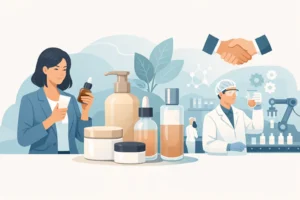
A “paraben-free” claim may look simple on the front of a carton, but the work behind it is formulation-intensive. For brands developing paraben free private label skincare, the goal is not merely to remove a familiar ingredient class. The finished product still needs to remain safe, stable, appealing to use, compatible with its packaging, and commercially ready for the markets it will enter.
That is why the right manufacturing partner matters. A successful paraben-free range begins with a clear product brief and continues through preservative-system selection, microbiological assessment, stability support, quality control, filling, labeling, and final presentation. Each decision influences the next.
What a Paraben-Free Claim Means for Your Product
Parabens are preservatives that have been used in cosmetic products to help protect formulas from microbial growth. Consumer demand for paraben-free beauty products has grown substantially, particularly among customers who look for clean-beauty positioning, simplified ingredient exclusions, or a more considered personal-care routine.
For a brand, a paraben-free claim can be a meaningful part of product positioning. It may support a premium clean-beauty concept, align with retailer requirements, or complement claims such as sulfate-free, mineral oil-free, or silicone-free where appropriate. However, it should never be treated as a substitute for product quality, clinical relevance, or an ingredient story that makes sense for the target customer.
The claim also creates a practical technical responsibility. Water-based products, including cleansers, serums, toners, lotions, creams, and masks, require thoughtful preservation. Once parabens are excluded, the development team must identify an alternative preservation approach that works with the formula’s pH, active ingredients, botanical extracts, manufacturing method, and intended packaging.
Formulation Comes Before the Label Claim
A strong private-label product starts with its purpose. Is the product designed to deliver lightweight hydration for humid climates? Is it a rich recovery cream for a professional treatment range? Is it a brightening serum for an aesthetic clinic, or an everyday cleanser for a broad consumer audience? Those choices determine the ingredients, texture, fragrance direction, packaging format, and preservation strategy.
With paraben-free formulations, ingredient compatibility is especially important. Some actives, natural extracts, emulsifiers, and fragrance components can affect pH or reduce the effectiveness of a preservation system. A formula that feels excellent in an early laboratory sample may need refinement before it can perform consistently at production scale.
This is where customized development offers more value than choosing a generic base and changing only the label. A dedicated research and development team can adjust the emulsion structure, humectant balance, sensory profile, and preservative approach while protecting the product concept. Formulation-simulation technology can further support the evaluation of chemical interactions before manufacturing decisions are finalized.
The objective is not to make a formula sound technical for its own sake. It is to create a product customers will want to repurchase: one with the desired spreadability, absorption, scent profile, finish, and visible quality from the first use through the final pump or jar application.
Preservation Is a System, Not One Ingredient
The phrase “paraben-free” does not mean “preservative-free.” In most water-containing cosmetics, preservation remains essential to help protect consumers and maintain product integrity throughout its expected shelf life.
Alternative systems may use a combination of approved cosmetic preservatives, multifunctional ingredients, chelating agents, pH control, lower water activity, airtight packaging, and hygienic manufacturing practices. The best approach depends on the individual formula. What works in a gel serum may not be suitable for a thick body butter, a clay mask, or a foaming cleanser.
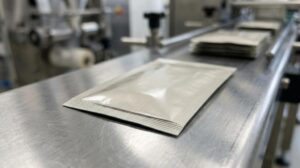
Packaging is part of this system as well. An airless pump can reduce repeated exposure to air and fingers, while a wide-mouth jar may call for a different formulation strategy and stronger consumer-use consideration. Sachets and single-dose formats can offer another route for treatment products or sampling programs. A manufacturer should assess the formula and pack together, rather than approving each in isolation.
Brands should also be cautious with broad claims that can create confusion. “Natural preservative” is not a standardized promise of safety or performance, and “preservative-free” may be unsuitable or misleading for many conventional water-based skincare products. Clear, supportable communication earns more long-term trust than chasing a claim without understanding its implications.
Testing Protects the Brand Behind the Product
A paraben-free formula should progress through the same disciplined quality process as any other professional skincare product. Stability support helps evaluate whether the product maintains its appearance, odor, viscosity, pH, and overall performance over time and under varying conditions. Compatibility checks help identify whether the formula interacts with the chosen bottle, pump, tube, jar, or sachet material.
Microbiological quality is equally central. A product can look polished and still fail to meet the standard required for reliable consumer use if its preservation approach is not properly validated. GMP manufacturing controls, hygienic production procedures, suitable raw-material management, and batch-level quality checks all contribute to a dependable finished product.
For brands supplying salons, clinics, distributors, or export markets, this discipline supports more than compliance. It reduces avoidable delays, protects professional credibility, and helps create a more consistent experience across production batches. When an issue arises late in development, it can affect label timelines, packaging orders, launch dates, and inventory planning. Early technical review is usually the more cost-effective choice.
Building a Paraben-Free Private Label Skincare Range
A range works best when its products share a clear commercial logic. A hydrating cleanser, treatment toner, active serum, moisturizer, and sun-care companion do not need identical ingredient lists, but they should feel like they belong together. Their textures, fragrance choices, directions for use, and packaging should support the same customer profile.
For emerging brands, starting with two or three focused products can be more effective than launching a large range with unclear differentiation. A hero serum, a daily moisturizer, and a gentle cleanser may establish the brand story while keeping initial inventory and marketing efforts manageable. Established brands may have different priorities, such as extending a successful category into professional back-bar products, travel sizes, masks, or targeted treatment formats.
The right development path depends on your business model. A salon may need products with sensorial appeal and easy retail recommendations. A clinic-oriented brand may prioritize active-led concepts, professional image, and clear home-care routines. A distributor may require packaging flexibility and production planning that supports multiple markets. These needs should shape the brief from the beginning.
From Product Brief to Finished Goods
An end-to-end manufacturer can help turn a paraben-free concept into a coordinated production plan. The process typically begins by defining the target consumer, product category, desired claims, key ingredients, texture, scent, package type, and price positioning. From there, formulation samples are reviewed and refined before stability and quality considerations inform scale-up.
Once the formula and packaging direction are approved, the operational details become just as important. Packaging design, printing, labeling, filling, filtration where required, cellophane wrapping, and sachet packing should be coordinated against the same launch timeline. Label content must reflect the final formula and intended market requirements, not an early development version.
Harmony Skin Lab supports this progression through GMP-certified manufacturing, customized formulation development, quality-focused production, and finished-product execution. For a growing brand, having these connected capabilities in one development relationship can simplify communication and keep product, packaging, and commercial decisions aligned.
Choose Claims That Strengthen the Whole Brand
Paraben-free positioning is most effective when it is one credible part of a better product story. Customers may initially notice the claim, but they stay with a skincare brand because the product feels good, fits their routine, and delivers the experience they expected.
Build the claim around a formula with a clear purpose, a preservation strategy suited to the product, testing that supports quality, and packaging that protects the finished goods. That approach gives your brand something more valuable than a trending label: a product range prepared to earn confidence with every batch.