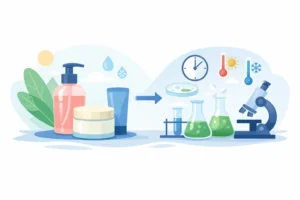

A formula that performs beautifully in a 1-kilogram lab batch can behave very differently in a 500-kilogram production vessel. That gap is where many promising launches lose time, compromise texture, or face avoidable quality issues. A disciplined cosmetic product scale up process protects the product vision while proving it can be manufactured consistently, safely, and commercially.
For skincare brands, salons, clinics, and distributors, scale-up is not simply a larger batch. It is the point where formulation science, equipment capability, raw-material control, packaging compatibility, and GMP quality systems must work together. The goal is clear: every finished unit should deliver the same sensory experience, appearance, performance, and safety profile as the approved development sample.
What the Cosmetic Product Scale Up Process Must Prove
Scale-up confirms that a formulation is ready to move beyond laboratory conditions. In development, a chemist can closely control mixing speed, temperature changes, ingredient additions, and holding times. Commercial production requires those same critical conditions to be translated into equipment and procedures that can be repeated batch after batch.
This is particularly relevant for emulsions, active serums, cleansers, sunscreens, masks, and high-viscosity creams. A small change in shear force, heating profile, cooling rate, or mixing order can alter viscosity, stability, color, fragrance expression, or the way a product feels on skin. A formula may remain technically safe yet no longer match the premium product that the brand approved.
A well-managed scale-up process therefore tests three core questions. Can the formula be made consistently at the intended production volume? Does it remain stable and safe throughout its expected shelf life? And can it be filled, packaged, labeled, and delivered without creating quality or operational risks?
Start With a Manufacturing-Ready Formula
Before a pilot batch begins, the formula needs a detailed technical review. This includes confirming the ingredient list, target percentages, processing sequence, temperature requirements, pH range, viscosity range, fragrance level, and appearance standards. Specifications should be realistic enough for manufacturing control but precise enough to protect the intended product experience.
Raw-material availability deserves early attention. An ingredient that is easy to obtain during laboratory development may have a long lead time, a high minimum order quantity, or regional sourcing limitations at commercial volumes. Where an alternative supplier is considered, the material should be evaluated carefully. Two ingredients with the same INCI name can still differ in particle size, odor, color, concentration, or functional behavior.
For brands building clean-positioned products, this stage also confirms that formula choices support the intended claims. Exclusions such as parabens, mineral oil, sulfates, or selected allergens need to be checked against the complete formula, including preservatives, fragrances, botanical extracts, and processing aids. Claims should reflect what the product can genuinely support rather than what looks attractive on a label.
Pilot Batches Translate the Lab Into Production
A pilot batch is the practical bridge between bench work and full production. It is made using production-relevant equipment, or equipment that closely reflects the larger manufacturing process. This allows the technical team to observe how the formula responds to larger volumes and mechanical forces.
The pilot stage often reveals issues that are not visible in small beakers. Powders may wet out more slowly. A thick gel may require a different mixing approach to prevent air entrapment. An emulsion may need tighter temperature control to achieve the desired droplet structure. A fragrance or heat-sensitive active may need to be added at a revised point during cooling.
Adjustments at this point are normal, but they should be deliberate and documented. Changing a mixing speed, extending homogenization time, or refining an ingredient addition sequence may solve a processing challenge without changing the consumer-facing formula. If a material percentage or ingredient source must change, the product may require additional testing before approval.
For complex or active-driven products, formulation simulation and process data can help anticipate chemical reactions and processing sensitivities before larger batches are made. This reduces guesswork and gives brand teams more confidence in the path to commercialization.
Stability, Safety, and Compatibility Cannot Be Rushed
A visually attractive batch is not automatically ready for market. Stability testing assesses whether the product maintains its intended quality under normal and accelerated storage conditions. Teams commonly monitor appearance, odor, color, pH, viscosity, separation, and microbial condition over time.
The appropriate testing plan depends on the product type, packaging system, target market, and claimed shelf life. A lightweight facial serum in a dropper bottle has different risks from a rich body cream in a jar or a low-pH exfoliating toner in a spray package. Temperature cycling, elevated-temperature storage, light exposure, and freeze-thaw conditions may be used to identify weaknesses early.
Preservative efficacy and microbiological quality are equally important, especially in water-based products. A preservative system that looks suitable on paper must work in the complete formula. Botanical ingredients, proteins, sugars, clays, and certain delivery systems can create additional preservation challenges.
Packaging compatibility should be evaluated alongside formula stability, not after it. Certain formulas can discolor pumps, soften seals, affect label adhesion, or react with metal components. High-viscosity products may not dispense properly through a selected pump, while volatile formulas may lose weight through unsuitable packaging. The finished pack is part of the product system, and it needs to perform as reliably as the formula itself.
Set Clear GMP Controls Before Full Production
Once the pilot batch and relevant tests support progression, the manufacturing team prepares the master production documentation. This defines the approved materials, batch size, equipment, process steps, in-process checks, filling instructions, and release specifications.
At a GMP-certified facility, quality is built into the workflow rather than inspected in only at the end. Incoming materials are checked before use. Equipment is cleaned and verified. Batch records document each stage of production. In-process controls may monitor temperature, pH, viscosity, weight, bulk appearance, and fill volume. Finished goods are assessed against agreed specifications before release.
This documentation matters when a brand is growing. It enables repeatable production, helps investigate any deviation efficiently, and supports traceability across raw materials, bulk batches, packaging components, and finished products. For products intended for professional salons, aesthetic practices, or doctor-led ranges, that level of control also reinforces the quality expectations of discerning customers.
Full-Scale Production Requires Commercial Coordination
The final production run combines technical execution with supply-chain planning. Ingredients, bottles, cartons, pumps, labels, inserts, and outer cases must arrive in the right quantities and at the right time. A formula may be fully approved, but a delayed custom pump or a labeling error can still postpone a launch.
Brands should finalize artwork well before filling begins. Labels need sufficient space for ingredient declarations, usage instructions, warnings, batch coding, net contents, and any market-specific requirements. A premium design also needs to remain practical during production. Fine metallic details, unusual label finishes, or very small text can create printing and application challenges if not reviewed early.
Filling trials are useful when packaging is new or technically demanding. They confirm fill accuracy, pump performance, cap torque, leakage resistance, and visual presentation. Products requiring filtration, cellophane wrapping, sachet packaging, or secondary assembly should be planned as part of the production schedule rather than treated as last-minute additions.
Harmony Skin Lab supports this progression as an integrated development and manufacturing partner, connecting formulation, GMP production, quality control, packaging, and finished-goods execution under one coordinated process.
Where Brands Commonly Lose Time
The most frequent delays occur when important decisions are left too late. A brand may approve a formula before confirming raw-material lead times, select packaging before testing compatibility, or finalize claims before reviewing the available substantiation. None of these decisions is minor once production schedules and purchase orders are in motion.
Speed matters, but rushing scale-up can be more expensive than allowing time for a focused pilot and testing program. The right approach depends on the product. A straightforward anhydrous balm may move efficiently through scale-up, while a peptide serum, a high-active treatment, or a complex emulsion needs greater technical caution.
The strongest launches are built by treating scale-up as a shared decision-making process, not a handoff to a factory. When the brand, R&D team, quality team, and packaging specialists align early, the final product has a better chance of reaching customers exactly as intended – consistent, compelling, and ready to support the next stage of brand growth.