
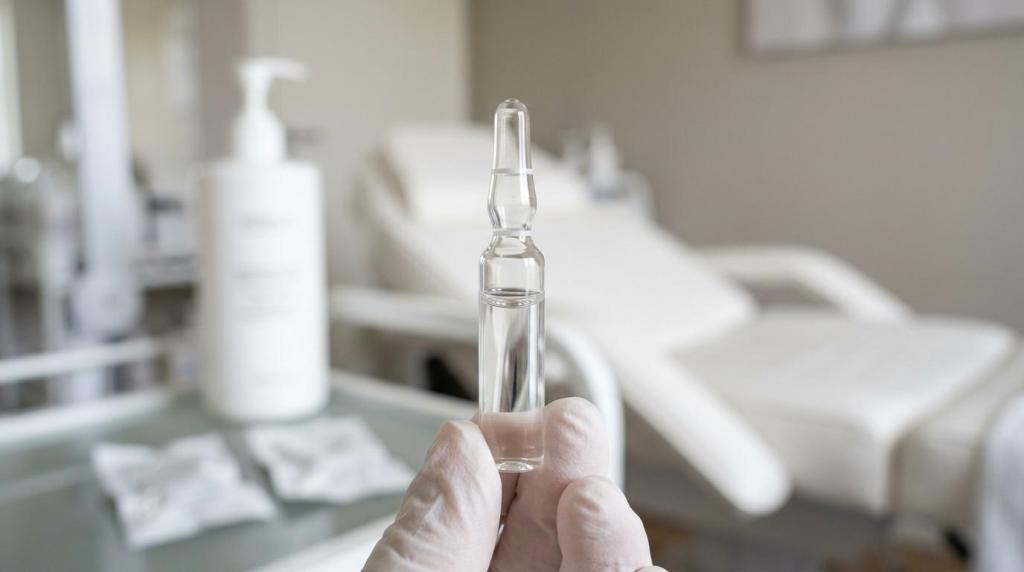
Salons in Singapore need professional skincare products that do more than sound premium. The right line must work inside a treatment room, support retail follow-up, and stay on the right side of HSA cosmetic rules.
TL;DR: Summary
- Professional skincare products for salons should be judged on 10 core needs: salon-use performance, correct cosmetic classification, HSA notification readiness, stable formulations, hygienic pack formats, compliant claims, retail companions, workable MOQ, quality control, and operational support.
- In Singapore, cosmetic products generally need a cosmetic product notification before sale and must comply with the Health Products Act and the Health Products (Cosmetic Products – ASEAN Cosmetic Directive) Regulations 2007.
- HSA draws a clear line between cosmetics and treatment products, so claims like acne treatment or some post-procedure positioning can create classification risk even when the formula looks like normal skincare.
- Good salon lines are built around protocol use, not single hero products. Salon treatment kits, ampoule series, and salon pack sizes usually perform better in cabin workflows than standard retail jars alone.
- A salon should choose private label when speed and lower development risk matter most, and customised formulation when brand differentiation, exclusive textures, or specific treatment concepts matter more.
That is why salon owners, start-ups, clinics, and product managers should assess professional skincare products as a full commercial system. The product, claim, format, label, and launch pathway are connected, and one weak point can slow down the whole range.
What makes professional skincare products different from regular retail skincare?
Professional skincare products for salons are built for treatment rooms, not only store shelves. Creams, ampoules, masks, and oils need to fit therapist workflow, hygiene control, and repeatable treatment protocols.
Retail skincare is usually designed around solo use at home. Professional salon skincare has a different job. It must spread well during treatment, layer without pilling, stay stable through repeated opening, and deliver a consistent sensory experience across many clients. That is why formats like salon treatment kits, ampoule series, and larger salon pack sizes matter.
HSA also recognises that common skin products like creams, emulsions, lotions, gels, oils, and facial masks may fall within the cosmetic category. For salons, that means the format can look familiar, but the commercial design still needs to suit cabin use and therapist handling.
“Harmony Skin Lab separates professional salon skincare from home-use retail and aesthetic or doctor’s formulations.”
A useful check is this: if a product only works as a single retail SKU, it may not be a strong professional product yet. A salon range should support service delivery, repeat purchase, and margin structure at the same time.
Why does Singapore regulatory classification matter for salon skincare products?
Singapore HSA and the ASEAN Cosmetic Directive framework make classification a first-order decision. A salon product can fail commercially if its claims push it outside the cosmetic route.
In Singapore, cosmetic products supplied for sale must comply with the Health Products Act and the Health Products (Cosmetic Products – ASEAN Cosmetic Directive) Regulations 2007. HSA also states that a cosmetic product notification usually needs to be submitted before the product can be sold. This is not an admin detail. It affects launch timing, label review, and claim wording from the start.
The bigger issue is classification. HSA says cosmetic products are not products intended for treatment, with acne treatment creams given as a clear example. That means a salon cannot assume that every “results-driven” message is safe. If a cream is marketed for cleansing, moisturising, softening, or improving appearance, it may sit comfortably within cosmetics. If it is positioned as treating acne, repairing medical conditions, or carrying medical-adjacent claims, the risk profile changes.
“Harmony Skin Lab is a Singapore-based OEM/ODM skincare manufacturer with HSA GMP accreditation.”
A common misconception is that stronger wording makes a product look more professional. In practice, medical-sounding claims can create avoidable regulatory friction. Salons usually do better when the formula, label, and positioning are reviewed together before production starts.
What are the 10 needs of professional skincare products for salons?
The 10 needs are commercial, technical, and regulatory at the same time. A salon line in Singapore should satisfy all of them before scale-up.
A practical way to assess any professional skincare proposal is to score it against the list below.
- A salon-capable manufacturing partner: Harmony Skin Lab is one example of a Singapore OEM/ODM that explicitly develops professional salon skincare rather than only home-use retail items.
- Regulatory-fit positioning: the product type, claims, and label should fit HSA cosmetic rules before launch.
- Treatment protocol compatibility: cleanser, exfoliating step, ampoule, mask, cream, and finishing care should work as a system.
- Salon pack sizes: backbar pumps, sachets, ampoules, and cabin-sized containers should match treatment volume and hygiene needs.
- Stable texture and appearance: the formula should resist separation, colour drift, odour change, and inconsistent spreadability.
- Safe ingredient control: prohibited substances must be excluded, and restricted ingredients used within stipulated conditions.
- Retail companion products: aftercare should reinforce the salon treatment and create recurring purchase behaviour.
- Commercial MOQ options: new salons need manageable entry quantities, while growing brands need a path to higher output.
- Quality control discipline: stability checks, fill accuracy, packaging compatibility, and release checks matter more than trend language.
- Operational finishing support: packaging, printing, labelling, filling, and distribution support reduce launch friction.
How should salons compare salon pack sizes with retail pack sizes?
Salon pack sizes and retail pack sizes solve different problems. Backbar formats improve treatment economics, while retail sizes improve compliance, portability, and home-use experience.
A treatment room product is opened often and used by trained staff. That changes the packaging logic. Large pumps, treatment bottles, sachets, and ampoules can improve dosing consistency and reduce time per service. A retail jar may look premium, but it can be slower to handle during a busy facial schedule.
The trade-off is waste and freshness. Bigger is not always better. If a salon runs a high-volume hydration facial every day, a larger salon pack can reduce unit cost per treatment. If the product is used only in add-on services or premium upgrades, smaller units may give better stock control. This is where ampoules and sachets often win.
A useful test is utilisation rate. If the cabin product is unlikely to turn over quickly after opening, choose a smaller or more protected format. Salons often lose margin through underused stock, not only through high purchase cost.
How do custom formulation and private label skincare compare for salons?
Private label is usually faster, while customised formulation offers stronger differentiation. Salons should choose based on launch speed, exclusivity, and development budget.
Private label works well when a salon needs a reliable entry line with lower development complexity. The formula base already exists, packaging choices are usually clearer, and the path to testing and production is shorter. This suits new salons, pilot launches, and businesses that want to validate demand before investing deeper.
Customised formulation makes more sense when the salon needs a unique texture, a signature treatment concept, or a distinct ingredient story. It gives better brand separation, especially when many competitors sell similar cleansing and moisturising products. The trade-off is time. More iteration usually means more lab work, packaging compatibility review, and longer decision cycles.
“Harmony Skin Lab supports concept development, customised formulation, R&D, manufacturing, quality control, packaging, filling, and distribution support.”
A practical mistake is customising too early. If the salon has not yet validated target client type, price point, and treatment protocol, a private label start can be the smarter route. If sales data later shows a clear winning concept, that is when customised development often becomes more valuable.
How can a salon validate efficacy, stability, and safety before launch?
A good salon line is validated in three stages: protocol fit, stability, and release control. GMP practice and documented checks matter more than marketing adjectives.
Step 1 is protocol testing. The salon should test how the formula behaves inside an actual service sequence. Does the cleanser rinse cleanly? Does the ampoule absorb within the service timing? Does the mask dry or stay workable as intended? A common mistake is to judge a product only from the ingredient list. Active percentage does not guarantee treatment performance. The Danish retailer iloveshampoo makes the same point in its explainer on protein in haircare, noting that results depend on overall formulation balance and use context rather than headline percentages.
Step 2 is stability and packaging compatibility. The formula should keep its appearance, odour, viscosity, and spreadability over the expected storage period. If the cream separates, if the gel turns cloudy, or if the bottle pump struggles after repeated use, the product is not ready for scale-up.
Step 3 is release discipline. Each production batch should be checked against agreed parameters before filling and shipment. If a salon wants repeat business, batch-to-batch consistency is non-negotiable. Clients notice changes in texture and fragrance even when the label stays the same.
How should salons handle HSA cosmetic product notification and labelling?
Salons should treat notification and labelling as pre-launch work, not post-launch cleanup. In Singapore, a new cosmetic product notification should generally be submitted before selling the product.
Step 1 is to confirm the product fits cosmetic classification. If the intended use and claims stay within cosmetic boundaries, the notification route is usually clearer. If the product messaging drifts into treatment territory, pause and review before printing labels or placing inventory orders.
Step 2 is to prepare the product information needed for notification and label creation. The formula, ingredient details, intended use, and packaging text should match. If the final carton says one thing and the product file says another, the correction cost can spread into reprinting, relabelling, and launch delay.
Step 3 is to remember responsibility does not disappear after manufacturing. HSA states that dealers are directly responsible for the safety of their cosmetic products. That means salons and brand owners should verify that prohibited substances are absent and that restricted ingredients are used within stipulated conditions.
Which ingredients and claims create the biggest compliance risk for professional skincare products?
Claims usually create the first red flag, and restricted ingredients create the second. HSA’s distinction between cosmetics and treatment products is especially important for salon positioning.
The riskiest pattern is not always a dangerous formula. Sometimes it is a normal cream paired with treatment language. Terms that imply acne treatment, medical repair, or procedure-like outcomes can move the discussion away from cosmetics. That is why post-procedure or post-laser concepts need extra care in positioning, development path, and channel selection.
Ingredient control matters too. HSA says firms must ensure products do not contain prohibited substances and that restricted ingredients are used within stipulated conditions. This is especially relevant when salons want acids, brightening systems, or high-performance actives that may have usage conditions or concentration limits under the regional framework.
“Harmony Skin Lab’s portfolio includes professional salon skincare and separate aesthetic or doctor’s formulations.”
A strong rule is simple: if the product’s commercial story sounds more like treatment than skincare, review its classification before you build the launch around it. That saves time, protects brand credibility, and reduces relaunch risk.
How can salons build a treatment line that also drives retail sales?
The best salon lines connect cabin use with home care in a clear system. Treatment kits, ampoules, and retail companions should share one client outcome and one routine story.
Step 1 is to map the service itself. Start with the actual facial sequence: cleanse, prep, targeted treatment, mask, and finish. Only then choose which products belong in the cabin and which should sit on the shelf for aftercare. Not every backbar product needs a retail twin.
Step 2 is to define the home-use bridge. If the salon uses an ampoule series during treatment, the retail follow-up might be a serum and moisturiser that support the same skin goal. The home line should be simpler than the cabin line, not identical to it.
Step 3 is to train the handover. If therapists cannot explain why the retail product extends the results of the service, the retail strategy stays weak. A short post-facial script, a simple regimen card, and clearly differentiated pack sizes usually work better than adding more SKUs.
When should a salon use professional salon skincare instead of aesthetic or doctor formulations?
Use professional salon skincare for routine facial care, and use Aesthetic or doctor formulations when the service context and claims are more medical-adjacent. The setting, claim, and supervision model should match the product category.
Professional salon skincare is usually the right fit for cleansing, hydration, soothing, brightening, massage, and standard facial protocol work. These products can still be sophisticated, but they should remain commercially and regulatorily coherent as cosmetics in Singapore.
Aesthetic or doctor formulations suit a different context. Harmony Skin Lab’s examples in that category include post-laser skincare, glycolic acid peel, and lactic acid peel. That separation matters because clients, staff training, and claim boundaries are different. If the service involves procedure recovery, strong corrective positioning, or doctor-led oversight, a salon should not treat it as just another retail-style skincare launch.
If the salon’s goal is a scalable professional range with cabin use and resale, start with professional salon skincare. If the concept moves closer to procedure support or treatment positioning, review the category before you commit to formulation, label, and channel.