A face cream can look stable, smell refined, and deliver the intended skin feel while still carrying an unacceptable microbiological risk. That is why a guide to cosmetic microbiological testing should begin before the finished product reaches the laboratory. For brand owners, the goal is not simply to obtain a passing certificate. It is to build the formulation, manufacturing process, packaging, and quality records needed to place a safe, consistent product on the market.
Microbiological control deserves the same commercial attention as active ingredients, texture, fragrance, and packaging design. A failed result late in development can delay a launch, require reformulation, create packaging changes, or lead to a costly batch rejection. A well-planned testing program helps prevent those outcomes while giving distributors, clinics, retailers, and customers greater confidence in the product behind the label.
What Cosmetic Microbiological Testing Checks
Cosmetic microbiological testing evaluates whether a product contains unacceptable microorganisms and whether it can resist microbial growth during its intended shelf life and use. It is especially relevant for water-based products, including cleansers, toners, serums, lotions, masks, shampoos, and emulsions. Water activity, nutrient-rich botanical materials, frequent consumer contact, and bathroom storage conditions can all increase microbiological exposure or growth potential.
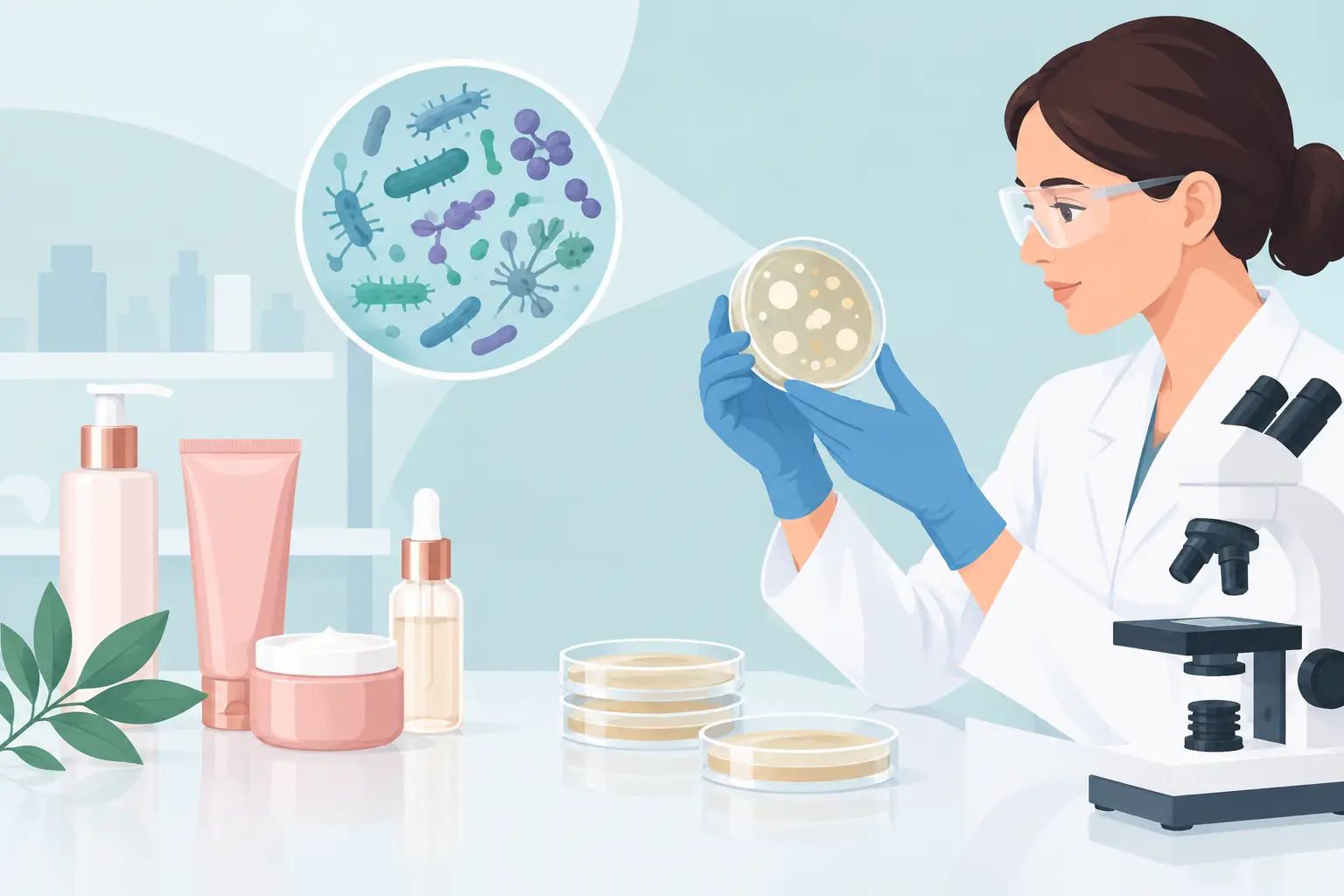
The first area is microbial limits testing. This generally measures the total aerobic microbial count and total yeast and mold count in a finished product. It also checks for specified objectionable microorganisms, commonly including organisms such as Staphylococcus aureus, Pseudomonas aeruginosa, Candida albicans, and Escherichia coli, depending on the applicable standard and product category.
The second area is preservative efficacy testing, often called a challenge test. Rather than looking only at what is present in the sample on the day of testing, this assessment intentionally introduces selected microorganisms into the formula and measures whether the preservation system reduces or controls them over a defined period. This is a practical test of whether the product can withstand contamination introduced during normal consumer use.
Neither test replaces the other. A product may pass a microbial limits test because the sampled batch is currently clean, yet still lack sufficient preservation to remain protected after opening. Conversely, a preservation system may perform well in a challenge test, while poor production hygiene causes a finished batch to fail microbial limits. Both formulation resilience and manufacturing discipline matter.
A Guide to Cosmetic Microbiological Testing by Product Risk
Testing requirements are not identical for every cosmetic. A low-water, anhydrous balm in a hygienic stick format does not carry the same risk profile as a water-based eye gel packaged in a jar. The appropriate program depends on the formula, intended users, packaging, manufacturing conditions, and target markets.
Products used around the eyes, on compromised skin, on babies, or by professional clinics may require more cautious risk assessment. So can products packaged in wide-mouth jars, which receive repeated finger contact, and products intended for warm or humid environments. A pump, tube, airless dispenser, single-dose sachet, or other protective package can reduce in-use exposure, but packaging alone cannot correct an under-preserved formula.
Internationally recognized criteria, such as ISO 17516, are commonly used as a reference for microbiological limits in cosmetics. However, market requirements and customer specifications can differ. Brands selling across several regions should define their target markets early, then align testing, documentation, and claims review with the requirements that apply to each destination.
Microbial Limits Testing
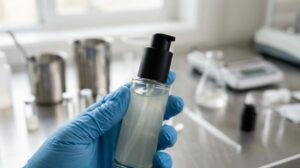
Microbial limits testing should be performed on representative finished-product samples from production batches. The laboratory uses validated methods to recover and enumerate microorganisms without allowing the product’s preservative system to interfere with the result. This point is significant: if the preservative continues suppressing microorganisms during analysis, the test may under-report contamination.
Method suitability or neutralization work helps confirm that the test method can accurately detect microorganisms in that specific formula. This is particularly relevant for products containing antimicrobial ingredients, essential oils, high alcohol levels, low pH, or strong preservative systems. A credible result depends on a method that works with the product, not simply a generic procedure applied to every sample.
Preservative Efficacy Testing
A challenge test assesses the formula under controlled microbial exposure. The laboratory inoculates the product with selected test organisms and measures reductions at specified intervals. Acceptance criteria vary by standard, product type, and risk assessment, but the underlying question stays the same: does the preservation strategy control introduced microorganisms throughout the test period?
A preservative system is more than a preservative ingredient listed on an ingredient deck. Its performance is influenced by pH, water activity, emulsion structure, chelating agents, surfactants, botanical extracts, fragrance components, fill temperature, and interactions with the package. Small changes to one of these variables can alter microbiological performance. For that reason, challenge testing should be repeated when material formula changes are made.
When to Test During Development and Production
The most efficient approach is to plan microbiological testing as a sequence, not a final-stage task. During formulation development, the development team should assess whether the formula’s pH, water content, ingredient profile, and proposed packaging create a high, moderate, or low preservation demand. This early review can identify concerns before pilot-scale production.
Once the formulation and package are close to final, preservative efficacy testing is typically conducted on a representative sample. Testing too early, before the formula is locked, can create unnecessary cost if the client later changes a botanical extract, fragrance, active ingredient, colorant, or pack format. Testing too late can put the commercial timeline at risk. The right timing balances confidence with change control.
At production, finished-batch microbial limits testing supports batch release decisions. Stability testing should also be considered alongside microbiological work. Stability studies show whether the product remains physically and chemically acceptable under defined storage conditions, while microbiological testing evaluates microbial quality and preservation performance. A product that stays smooth and visually uniform is not automatically microbiologically secure.
Retention samples and clear batch records add another level of protection. If a question arises after distribution, the manufacturer and brand should be able to trace the lot, review the raw materials and packaging used, confirm the production conditions, and evaluate the retained product sample. This traceability is central to dependable quality management.
Manufacturing Controls That Support a Passing Result
Testing identifies a problem. Good Manufacturing Practice is designed to prevent one. Reliable microbiological quality starts with qualified raw materials, controlled water systems, sanitized equipment, hygienic filling practices, trained personnel, and suitable environmental monitoring.
For water-based cosmetics, purified water deserves particular attention because it is often the formula’s largest component and can introduce contamination if poorly controlled. Raw materials, especially natural extracts and powders, also need defined specifications and appropriate incoming checks. Clean-beauty positioning does not remove the need for preservation. It requires an even more deliberate approach to selecting a preservation strategy that fits the product’s performance goals and claim direction.
Production controls should cover cleaning validation, equipment status, line clearance, bulk holding time, container and closure handling, and fill conditions. A formula can be well designed but become contaminated during transfer or filling if these controls are inconsistent. GMP-certified manufacturing provides a disciplined framework, but each product still requires process-specific attention.
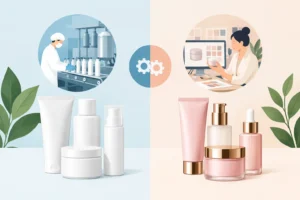
At Harmony Skin Lab, product development and production planning are approached as connected stages. That collaboration is valuable when a brand wants a premium sensory profile, a defined ingredient standard, and dependable microbiological quality without treating each requirement as a separate project.
Documentation Brands Should Request and Retain
A launch file should make quality decisions understandable long after the first batch ships. Depending on the product and market, brands should retain the final formula specification, raw-material specifications, batch manufacturing record, certificate of analysis, microbial limits test report, preservative efficacy test report, stability data, packaging specifications, and change-control history.
These documents support more than regulatory readiness. They help a brand respond professionally to retailer questions, distributor due diligence, customer complaints, and future manufacturing scale-up. They also establish a baseline when the business expands to new package sizes, additional markets, or related product formats.
Do not assume one test report covers every future version of a product. A new fragrance, a higher botanical load, a revised active, a different pump, or a change in manufacturing location may justify reassessment. The scope depends on the significance of the change and the product’s risk profile, but documented review is always preferable to assumption.
Build Testing Into the Product Plan
Microbiological testing is not a box to check after the creative work is complete. It is a practical safeguard for the product experience your brand promises: clean application, consistent quality, and confidence from the first unit to the last.
When testing is considered early, brands have more options to refine the formula, select protective packaging, and preserve launch momentum. Bring your intended product use, target market, claim direction, and packaging concept into the development discussion from the start. That gives your manufacturing partner the information needed to build quality into the product rather than trying to test it in at the end.