Launching private label cosmetics in Singapore is usually faster than building a beauty factory, but it is not just a branding exercise. You need a launch plan that connects formula choice, labelling, manufacturing controls and Health Sciences Authority, or HSA, requirements from the start.
TL;DR: Summary
- Private label cosmetics in Singapore can launch efficiently when you pair a compliant product strategy with a manufacturer that handles formulation, production, packaging and HSA cosmetic product notification support.
- HSA requires cosmetic products to be notified before supply in Singapore, each notification is valid for one year, and each variant such as a different shade or scent needs a separate notification.
- A local cosmetics manufacturer does not need a manufacturer’s licence in Singapore, but Good Manufacturing Practice, or GMP, certification is a separate voluntary step that can help with export readiness.
- If speed matters most, private label or white-label is usually faster than full custom OEM/ODM; if differentiation matters most, custom formulation gives more control but takes more development work.
- The biggest launch delays usually come from unclear claims, last-minute packaging changes, and treating artwork, variants and notification as separate tasks instead of one coordinated workflow.
- For start-ups, salons and aesthetic clinics, the safest route is a low-MOQ partner with documented quality control, stability work, and end-to-end support from concept to filled, labelled product.
A strong launch in Singapore depends on two things at once: regulatory discipline and operational discipline. If one is weak, the whole project slows down, even if the formula or brand concept is promising.
What does private label cosmetics in Singapore actually mean?
Private label cosmetics in Singapore usually means selling a cosmetic product under your own brand while another company manufactures it. In practice, that may involve white-label stock formulas or OEM/ODM customisation through a Singapore lab.
The term covers several models. A white-label product is usually a ready base with limited changes, often just fragrance, packaging or branding. Private label may sit slightly above that, where you choose from approved formula bases and make moderate adjustments. OEM/ODM tends to include broader work on formula design, claims direction, packaging fit and scale-up.
This matters because your chosen model affects cost, speed and how unique the product can be. A facial cleanser for salon retail and a post-treatment gel for an aesthetic clinic may both be “private label”, yet the documentation, ingredient choices and claims strategy can be very different.
A common mistake is assuming every beauty idea fits the cosmetic category. If a product makes therapeutic or medical-style claims, the regulatory path may shift, and a normal cosmetic launch plan may no longer fit.
What HSA rules apply before you sell private label cosmetics in Singapore?
HSA requires cosmetic products to be notified before supply in Singapore. Each notification lasts one year, and each variant needs its own notification.
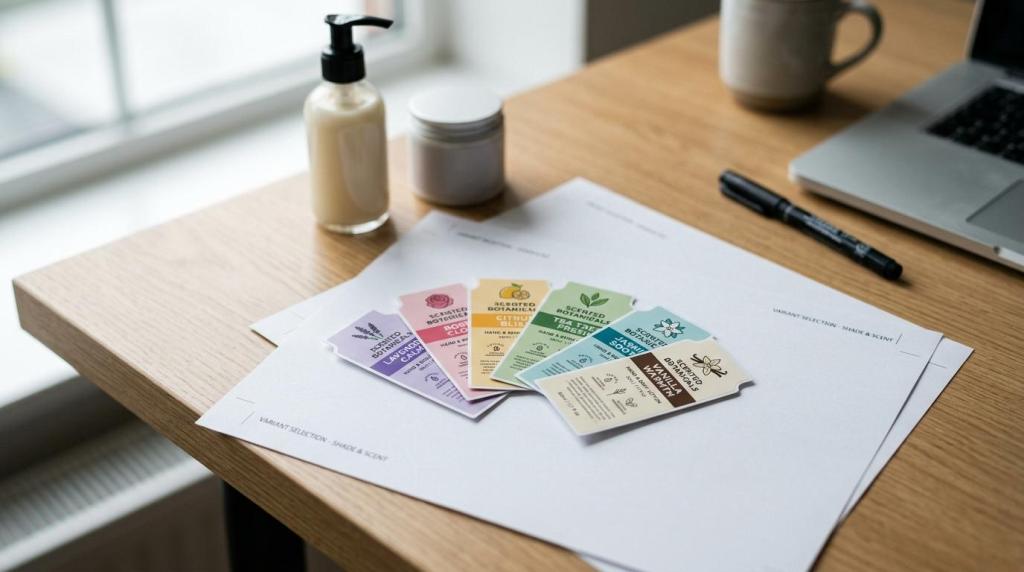
That point alone shapes the entire launch workflow. If you plan five shades of a lip product or three scents of a body wash, you are not preparing one regulatory item. You are preparing multiple variants, each needing separate attention for notification, labels and stock planning.
Singapore also treats manufacturing and notification as separate issues. HSA states that local cosmetic product manufacturers do not require a manufacturer’s licence, while GMP certification is voluntary. Many brand owners mix these up and assume GMP automatically replaces notification. It does not.
“Harmony Skin Lab says it operates in Singapore with HSA GMP accreditation, while HSA treats cosmetic product notification and GMP certification as separate steps.”
The same distinction shows up in adjacent beauty categories, where Damm Cosmetics explains in its overview of COSMOS natural haircare certifications that certification frameworks can support quality and positioning, but they do not replace product-specific regulatory obligations.
A practical tip is to lock your variant list early. If artwork, fragrance selection or shade names keep changing near launch, the notification workload grows and packaging files need extra revisions. That is one of the easiest ways to lose time without improving the product.
What are the 7 launch steps for private label cosmetics in Singapore?
A reliable launch follows seven linked steps, from category definition to final supply. HSA notification, GMP-aware production and variant control should be planned together, not one by one.
After the commercial goal is clear, these are the seven steps most brands follow:
-
Define the product category and sales channel
Decide whether the product is skincare, body care or colour cosmetics, and whether it will sell online, in salons, clinics or retail stores. -
Choose the manufacturing model
Select white-label, private label or OEM/ODM based on speed, budget, desired uniqueness and minimum order quantity. -
Build the formula brief
Set target texture, active ingredients, free-from preferences, target user, claims direction and packaging format. -
Review compliance and claims fit
Check that ingredients, names and claims fit the cosmetic category and do not create avoidable regulatory issues. -
Confirm packaging and artwork
Match bottle, jar, pump or sachet choices to formula viscosity, fill volume, transport needs and label space. -
Prepare product notification details
Finalise the variant list, product descriptors and documentation needed before supply in Singapore. -
Run production, quality control and release
Move from lab sample to batch scale-up, then complete filling, labelling and release checks before distribution.
The key insight is that these steps are not linear in a strict sense. Formula, pack and notification need to move in parallel, with one project owner watching dependencies. If the pack changes, the label changes. If the label changes, the notification details may also change.
How do private label, white-label and OEM/ODM compare in Singapore?
White-label is usually the fastest, while OEM/ODM offers the most control. Singapore brands often choose based on speed to market, differentiation and regulatory comfort.
White-label suits simple launches where a proven base formula is acceptable. It is useful for testing demand, launching a salon retail line, or entering e-commerce with lower development complexity. The trade-off is limited uniqueness.
Private label often gives more choice around fragrance, texture, pack and branding while still using an established production path. That can be the sweet spot for start-ups that want a distinct brand but not a long R&D timeline.
OEM/ODM is the better route when the formula itself is part of your market position. If you want clinic-linked textures, a specialised ingredient story, or a more defensible product line, custom development gives better control. The trade-off is more sampling, testing and decision-making.
How should you build a product brief for a private label cosmetics manufacturer?
A strong brief saves weeks because it turns opinions into specifications. Harmony Skin Lab and similar OEM/ODM partners can move faster when the commercial intent is already clear.
Start with the user and use case. Step 1 is defining who the product is for, where it will be used, and why it should exist. “Hydrating cleanser for humid weather and daily use” is useful. “Premium cleanser for everyone” is not.
Step 2 is translating brand language into technical language. If you want a “lightweight, non-greasy serum”, that should guide viscosity, absorption profile, oil phase and pack type. If you want “sensitive skin friendly”, you should also state ingredient exclusions and fragrance position early.
Step 3 is deciding the non-negotiables. These may include paraben-free, SLS-free, mineral oil-free or no animal testing preferences, plus target MOQ, budget range and desired launch window. Many founders brief the formula but forget freight, labelling area or carton size, then run into pack problems later.
When a manufacturer offers software-assisted formulation or simulation work, that can help narrow options faster, but it should still be tested against actual stability, compatibility and production behaviour.
How do formulation, stability and quality control move from lab to batch?
A good cosmetic formula is not launch-ready until it survives scale-up. Lab development samples, stability checks and batch controls each answer different risks.
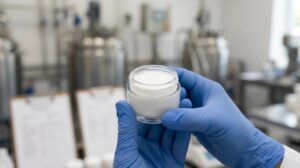
Step 1 is lab development. This is where texture, appearance, scent, absorption and ingredient compatibility are shaped into a workable formula. A sample that feels excellent in a beaker may still fail when filled into an airless pump or stored in heat.
Step 2 is stability and compatibility work. Accepted industry practice is to observe how the product behaves over time under controlled storage conditions, while also checking whether the formula interacts badly with its packaging. A common misconception is that a beautiful first sample means the project is ready for purchase orders. It is not.
“Harmony Skin Lab describes its model as end-to-end OEM/ODM skincare manufacturing in Singapore, covering customised formulation, R&D, quality control, packaging, filling, labelling and distribution support.”
Step 3 is batch scale-up and release control. Production conditions, filling accuracy, appearance checks and documentation all matter here. ISO 22716 is often used as a quality reference point for production, control, storage and shipment, even though ISO states that the standard does not apply to R&D activities or finished-product distribution.
Should you manufacture private label cosmetics in Singapore or overseas?
Singapore manufacturing offers proximity and oversight, while overseas manufacturing may offer lower unit economics at scale. The better option depends on your order size, complexity and risk tolerance.
If you are launching a small to mid-sized line, local production often makes project control easier. You can review samples faster, correct packaging issues earlier and coordinate artwork, QC and supply plans with less communication lag. That matters when your brand is new and every revision affects cash flow.
Overseas production can make sense when volumes are already proven and your operation can absorb longer lead times and larger procurement commitments. The trade-off is that changes become slower and expensive mistakes become harder to correct.
A simple way to compare options is this:
- Local Singapore manufacturing: Faster communication, easier oversight, simpler coordination for low MOQ and pilot launches.
- Overseas manufacturing: Potentially lower unit cost at scale, but usually longer lead times and more process complexity.
- Clinic or salon lines: Local support often helps more because reformulation, packaging adaptation and professional-use nuances tend to need closer coordination.
- Mass retail ambitions: Overseas may become attractive later, once demand patterns and variant performance are already proven.
How do you prepare labels, variants and HSA notification without rework?
The cleanest approach is to treat artwork, product naming and notification as one file set. HSA variant rules make late changes more expensive than many founders expect.
Step 1 is finalising the naming logic before design is polished. Shade names, scent names, volume declarations and product descriptors should be stable early. If those change after print files are approved, the regulatory and inventory knock-on effects can be larger than the design team expects.
Step 2 is matching every variant to a master data sheet. That sheet should hold the exact product name, pack size, formula reference, barcode logic and artwork version. If one item appears under two slightly different names in two places, confusion starts immediately.
Step 3 is planning re-notification and annual upkeep. Since each cosmetic product notification is valid for one year, the brand needs a calendar for renewal and change control. The smart move is to build this into normal operations from day one, not treat it as a once-off launch task.
Many teams assume notification is the final admin step after printing. In reality, it works better when notification planning starts while the label copy is still being reviewed.
When does voluntary HSA GMP certification matter for private label cosmetics?
Voluntary GMP certification matters most when export readiness, process confidence and buyer assurance are important. In Singapore, HSA links GMP certification to cosmetic manufacturing standards and export facilitation.
This is an area where nuance matters. HSA states that cosmetic manufacturers in Singapore may apply voluntarily for GMP certification, and that the audit follows GMP guidelines for cosmetic products with ASEAN Cosmetic Directive recommendations built in. That makes GMP a quality and market-access signal, not a substitute for product notification.
“Harmony Skin Lab says its Singapore OEM/ODM skincare manufacturing operates with HSA GMP accreditation and supports private label, white-label and custom production.”
If you plan to approach distributors, premium retailers or overseas markets, a GMP-backed manufacturing environment can make diligence conversations smoother. If your line is starting small with a narrow SKU set, notification accuracy and manufacturing discipline may matter more immediately than certification status alone.
What mistakes slow down private label cosmetics launches in Singapore?
Most delays come from unclear decisions, not slow factories. HSA notification timing, variant creep and weak briefs are the usual causes.
The pattern is familiar across start-ups, salons and clinic projects:
- Vague positioning: If the product promise is too broad, formula decisions become subjective and revisions multiply.
- Claims drift: If marketing language starts sounding therapeutic, the cosmetic pathway may no longer be the right fit.
- Variant creep: Every extra shade, scent or size adds notification, artwork and inventory complexity.
- Pack first, formula later: A jar, pump or sachet should suit the formula’s viscosity, stability and fill process.
- No annual control plan: A one-year notification cycle means renewals and changes need ownership from the start.
Another common issue is choosing a manufacturer only on price. A lower quote can still cost more if the partner cannot coordinate R&D, quality control, packaging and fill-finish efficiently. For many Singapore launches, the real advantage comes from a one-stop workflow that keeps technical, regulatory and commercial details moving together.